


Rising 1,086 meters above Cape Town, Table Mountain is the undisputed icon and natural landmark of South Africa. Its iconic flat top, often draped in a “tablecloth” of clouds, forms the core of the Cape Peninsula’s remarkable biodiversity.
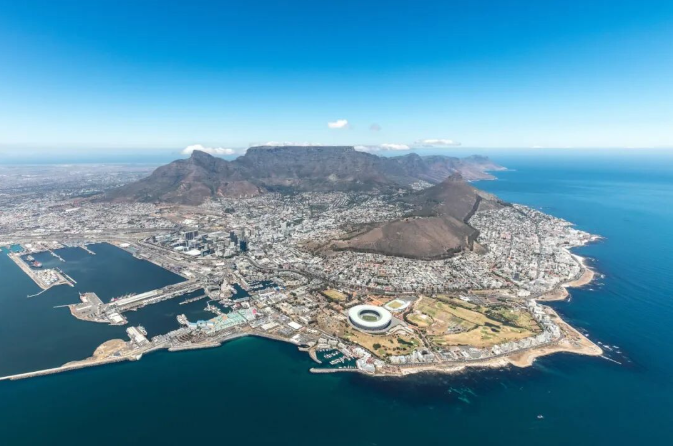
Part of Table Mountain National Park since 1998, it was inscribed as a UNESCO World Natural Heritage site in 2004 as a key component of the “Cape Floral Region Protected Areas.” It represents the smallest but richest plant kingdom on Earth—the Cape Floral Region—hosting over 2,200 plant species, many endemic, such as the king protea. The mountain’s sandstone rocks date back around 500 million years. The rotating cable car whisks visitors to the summit, offering breathtaking views of Cape Town, Robben Island, and the vast Atlantic and Indian Oceans.
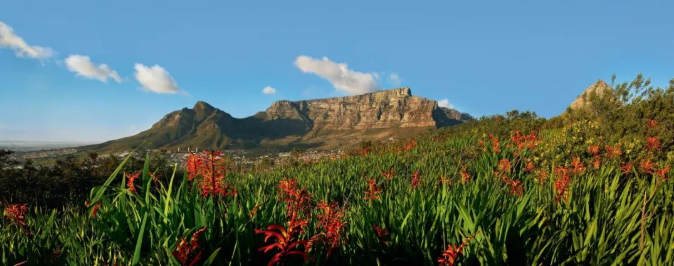
There are two main ways to experience Table Mountain: take the classic rotating cable car to the top in about 5 minutes, or hike up via routes like Platteklip Gorge, which takes 2–3 hours. The summit features a network of circular walking paths for easy exploration. Due to rapidly changing weather, the cable car may close in strong winds, so checking the official website in advance is advised. The best time to visit is during the Southern Hemisphere summer (November to February), when skies are clearer. The vibrant V&A Waterfront, Cape of Good Hope, and other attractions in Cape Town complement a visit to the mountain.