


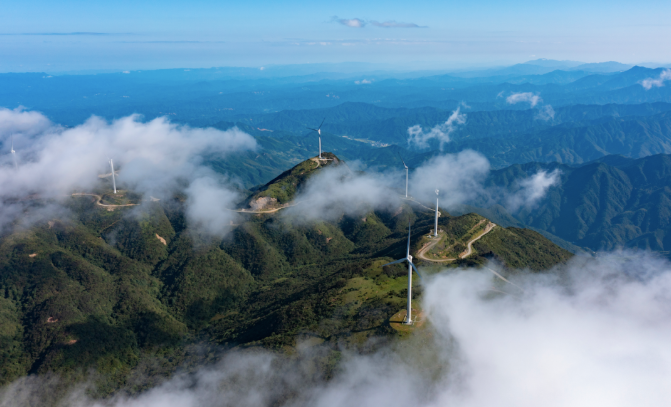
Spanning "four cities and ten counties" in Hunan Province, Mount Xuefengshan is the province’s longest and largest mountain range, often called Hunan’s "father mountain." The selected area includes sites like the Hunan Mount Xuefengshan National Forest Park in Hongjiang and Chuanyan Mountain in Xupu County. It is a vital heritage site of the Chinese national spirit and a main artery of Huxiang culture.
Source: Hunan Mount Xuefengshan Forest Park Management Office
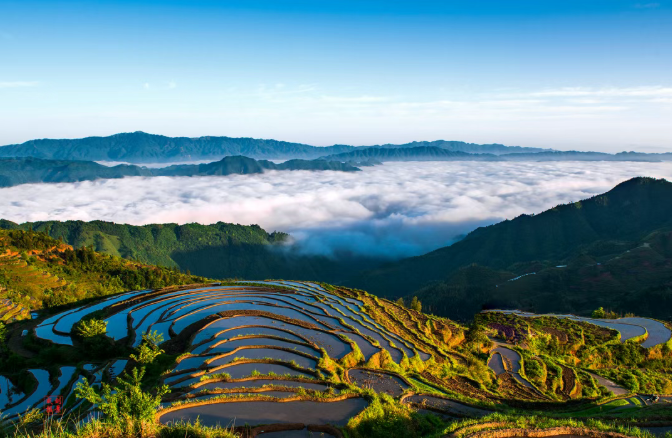
Its highest peak, Subao Ding, rises 1,934 meters, with forest coverage over 85% and negative oxygen ions exceeding 12,000 per cubic centimeter. Recognized as one of the world’s 200 ecologically significant areas, it is hailed as a "biological gene bank" and "mysterious species paradise," with rich biodiversity and well-preserved landscapes that change with the seasons—from winter rime and ice cascades to summer alpine meadows. Historically, it is a confluence of wartime, ethnic, and red culture. The 1945 Battle of Mount Xuefengshan was the last major engagement on the Chinese frontline in the War of Resistance against Japan. The Gaomiao site in Hongjiang yielded carbonized rice grains tracing millennia of rice cultivation, and Yuan Longping, the "father of hybrid rice," conducted groundbreaking research here for over 30 years.
Source: Hunan Mount Xuefengshan Forest Park Management Office
Tourism development follows the principle that "lucid waters and lush mountains are invaluable assets," offering eco-tours, forest wellness, and folk experiences. During the 2025 National Day holiday, the "world’s longest alpine cable car" at Mount Xuefengshan began operation, enhancing visitor experience and drawing over 100,000 tourists in eight days, boosting regional tourism. Its selection acknowledges achievements in ecological protection, cultural heritage, and rural revitalization through cultural tourism, aiding its goal to become a world-renowned mountain cultural tourism destination.