


Mount Huangshan stands majestically in Huangshan City, southern Anhui Province. Stretching about 40 kilometers from north to south and 30 kilometers from east to west, it covers a total area of approximately 1,200 square kilometers, with a scenic area of 160.6 square kilometers. Its central coordinates are 30°11′N, 118°10′E, lying along the mysterious 30°N latitude line and forming the watershed between the Yangtze River and the Xin'an River.
Source: Huangshan Scenic Area Management Committee
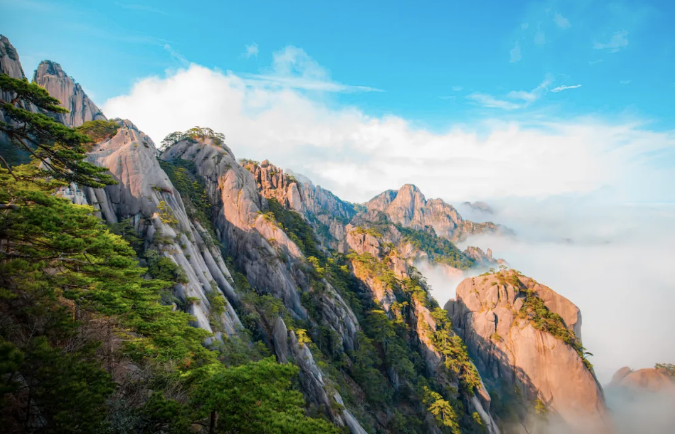
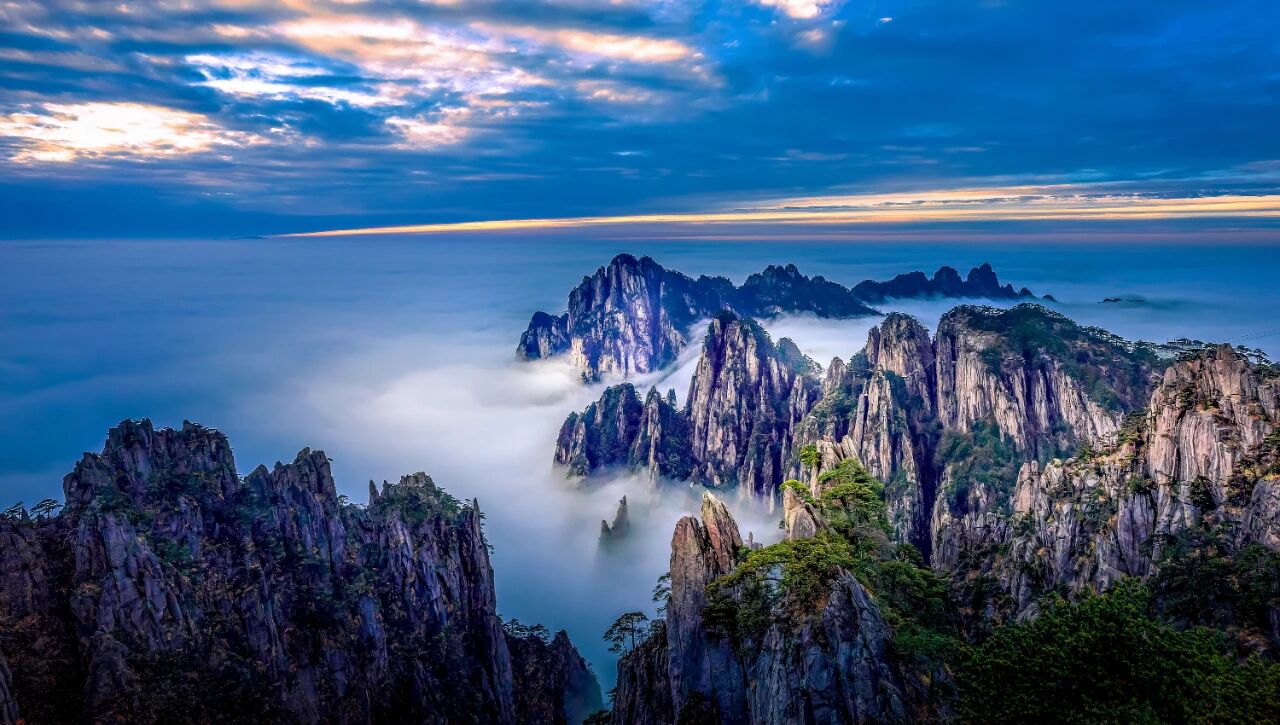
As the only mountain in the world to hold the triple crowns of UNESCO World Cultural Heritage, World Natural Heritage, and Global Geopark, Mount Huangshan is celebrated for its "Four Wonders": peculiar pines, bizarre rocks, sea of clouds, and hot springs. Winter snow is often hailed as the "Fifth Wonder." Renowned as a "fairyland on earth" and the "most spectacular mountain under heaven," Mount Huangshan was shaped by the Yanshan orogeny and Quaternary glaciation, forming a unique granite peak forest landscape. Its core scenery is dominated by three towering peaks: Lotus Peak (1,864 meters), Bright Summit, and Celestial Capital Peak. With vegetation coverage of 93% and forest coverage of 84.7%, the area boasts a negative oxygen ion concentration consistently above 20,000 per cubic centimeter, reaching 50,000–70,000 in hot spring areas, making it a true "natural oxygen bar."
Source: Huangshan Scenic Area Management Committee
Culturally rich, it was historically called Yishan and renamed Mount Huangshan in the Tang Dynasty due to legends of the Yellow Emperor refining elixirs here. Numerous literati have penned verses in its praise, and the traveler Xu Xiake, who climbed it twice, extolled it as unparalleled. The saying "After visiting the Five Great Mountains, no other mountains draw interest; after visiting Mount Huangshan, even the Five Great Mountains pale" captures its fame. Its inclusion as a World Famous Tourist Mountain highlights not only its global geological and ecological value but also its role as a symbol of Chinese culture.