


The International Mountain Tourism Day 2026 Theme Events opened on 29 May in Shennongjia, Hubei Province. With the theme "Preserving World Heritage, Sharing the Prosperity of Famous Mountains — Zhiyin Hubei, Mysterious Shennongjia", the gathering brought together representatives from international organizations, foreign embassies and consulates in China, cultural and tourism authorities,, and media professionals from around the world to explore pathways for the coordinated development of ecological protection and cultural tourism. The program featured the Opening Ceremony, the Dialogue among World Famous Mountains 2026, the Investment and Business Meeting for Mountain Culture and Tourism, and a series of other events. Guests participated in various formats, sharing cutting-edge ideas and deepening practical cooperation. Pema Gyamtsho, Director General of the International Centre for Integrated Mountain Development (ICIMOD), delivered a video speech at the 2026 Dialogue among World Famous Mountains.

The following is the full text of the speech:
It is my great pleasure to address you on the occasion of the 2026 "Dialogue Among World Famous Mountains". On behalf of the ICIMOD, I would like to extend my warmest greetings and sincere appreciation to all participants, experts, and partners dedicated to mountain conservation and sustainable development.
It is encouraging to see that since its launch in 2018, the "Dialogue Among World Famous Mountains" has grown into an influential global platform for exchange and cooperation in mountain tourism. Representatives from iconic mountain regions such as the Alps, the majestic Himalayas, and the Cairngorms, known for their strong commitment to ecological protection, have come together to share experiences, build consensus, and advance greener and more sustainable pathways for mountain tourism.
The Hindu Kush Himalaya region, where ICIMOD works, is one of the most ecologically and culturally diverse regions on the earth. It forms a critical biodiversity safety-net, spanning 4 global biodiversity hotspots, 6 UNESCO natural heritage sites, 30 Ramsar sites, and 330 Important Bird and Biodiversity Areas. This extraordinary biodiversity underpins essential ecosystem services. The region supports around 240 million people, and its river basins provide water to 1.9 billion people, about a fourth of the world's population. This region is also rich in cultural diversity providing a foundation for a unique socio-ecological system which has shaped and been shaped by the history, traditions, and livelihoods of millions of people living here. Mountains are not only ecological safeguards but also foundations for cultural continuity and regional development.
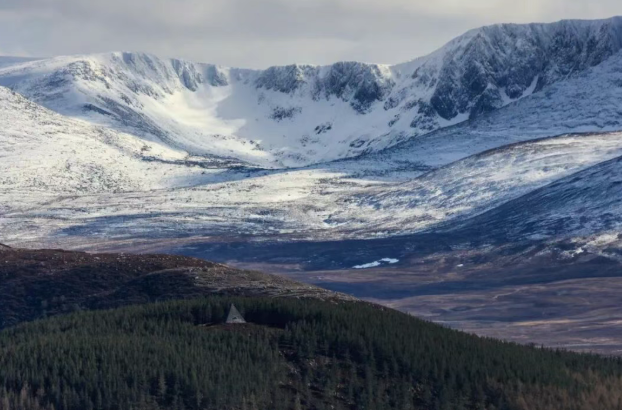
Cairngorms Mountain
Source: Unsplash
The theme of today's dialogue reminds us that sustainable mountain tourism must be firmly grounded in ecological conservation. Only by protecting what we have can we ensure long-term development, and only through responsible development can we strengthen conservation.
At the same time, mountain tourism offers significant opportunities for innovation. By leveraging digital technologies, strengthening community participation, and promoting green value chains, we can develop models that balance environmental protection with economic growth.
In the Himalayas, practices that combine community-based ecotourism with livelihood improvement are increasingly demonstrating the significant potential of mountain tourism to promote ecological conservation and enhance community well-being.
However, we must also recognize the challenges ahead. Climate change, biodiversity loss, and increasing resource pressures are placing mountain ecosystems under growing stress. The vulnerability of mountain communities is rising, while the global significance of mountain systems remains insufficiently reflected in policy and investment. This calls for stronger international cooperation, more innovative policy approaches, increased green investment, and enhanced knowledge sharing.
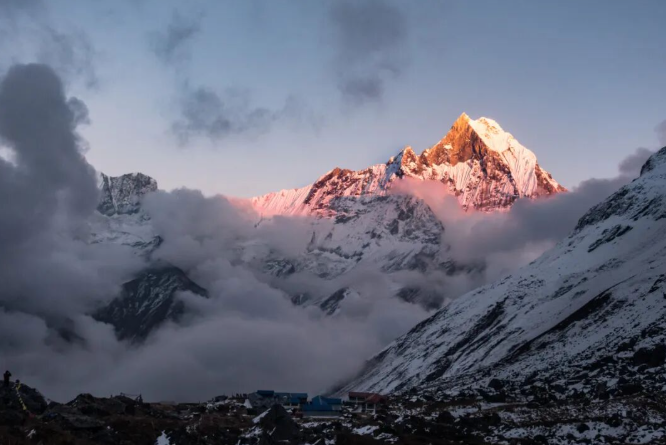
Machapuchare (Fishtail Peak) of the Himalayan Range
Source: Tuchong Creative
Our collective efforts should align closely with the goals of the United Nations 2030 Agenda for Sustainable Development. More importantly, it requires us to translate commitment into action by working across borders, sectors, and communities to ensure that mountain ecosystems are protected while livelihoods are strengthened.
Distinguished friends: Mountains connect us, sustain us, and shape our shared future. In the HKH and beyond, protecting mountains means safeguarding ecosystems, cultures, and livelihoods that hundreds of millions depend on. Advancing sustainable mountain tourism is not only about conservation — it is about strengthening resilience and improving the well-being of mountain communities.
Let this dialogue be a renewed call for partnership, knowledge exchange, and collective action. Together, we can safeguard the ecological integrity of the world's great mountains, empower communities, and build a more resilient, sustainable, and inclusive future.
I wish this dialogue every success and fruitful discussions. Thank you.
Unless otherwise credited, all text and images are sourced from: International Mountain Tourism Alliance (IMTA)
Editor Ⅰ: Zhang Congxiao
Editor Ⅱ: Zhang Wenwen
Editor Ⅲ: Zhang Yijing