


On May 29th, the “Dialogue among World Famous Mountains 2026” Exchange and Sharing Session was held in Shennongjia, Hubei Province. Themed "Ecological Conservation and Pathways for Innovative Development of Famous Tourism Mountains," the session invited representatives globally from various sectors to engage in discussions on the topic of "Sustainable Development Practices of World Heritage Mountains." Representatives from Shennongjia Forestry District (China), Mount Fitz Roy (Argentina), Soudah Mountain (Saudi Arabia), Mount Danxia (China), and Yên Tử Mountain (Vietnam) shared cutting-edge practices in ecological protection, cultural tourism innovation, community coexistence, and value transformation, showcasing the diverse images of mountain tourism destinations. They explored practical pathways for the sustainable development of world heritage sites together, fully demonstrating the core principles of "protection first, green development, community sharing, and international coordination."
Shennongjia Forestry District, China: Protecting the Ecological Foundation at the Highest Level, Achieving Value Transformation through Green Development
Lu Lin, Director of Shennongjia Forestry District Culture and Tourism Bureau, Hubei Province, systematically shared Shennongjia's practices centered on "top-tier protection, green development, sharing and win-win." As a World Natural Heritage Site, Global Geopark, and Man and the Biosphere (MAB) Reserve, Shennongjia has established a "three-category, five-tier" region-wide zoning control system. By integrating institutional regulation, technological empowerment, and systematic restoration, it has created an integrated smart protection and management network, achieving 45 consecutive years without major forest fires, steadily increasing the golden monkey population, and continuously enriching biodiversity.
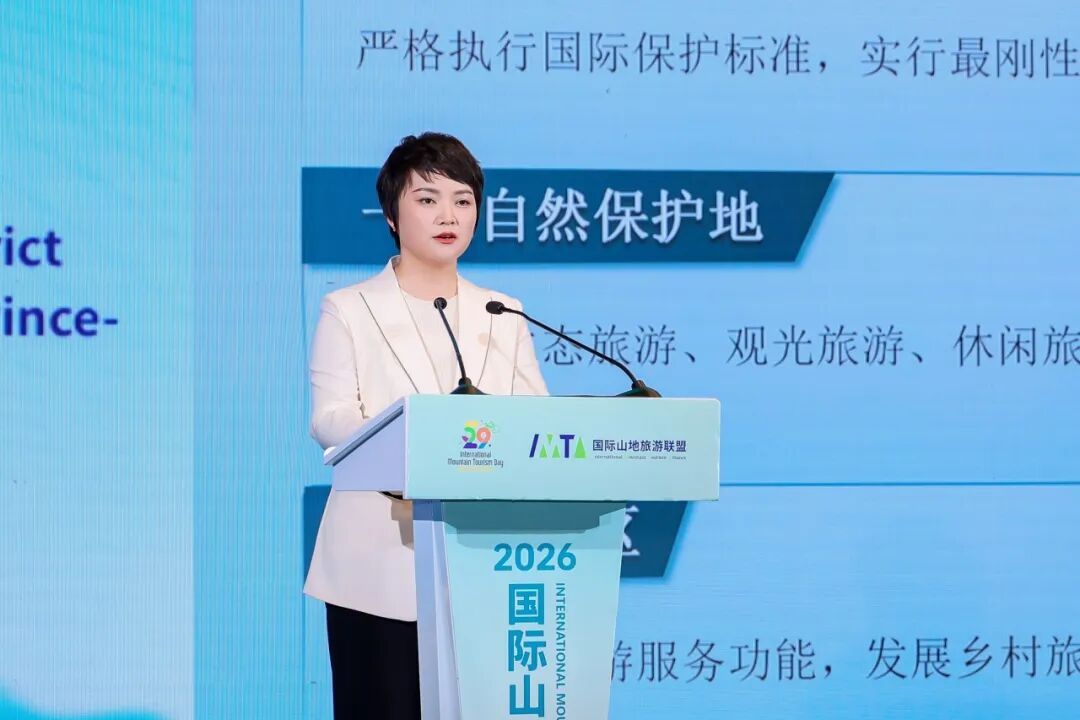
Lu Lin, Director of Shennongjia Forestry District Culture and Tourism Bureau, Hubei Province, sharing at the session
On the basis of strictly upholding the ecological red line, Shennongjia promotes region-wide differentiated development, creating four-season tourism products of "spring flower viewing, summer cooling, autumn foliage viewing, and winter snow play." It vigorously develops new business formats such as forest wellness, science education and study tours, and outdoor sports, upgrading the cultural tourism industry from sightseeing to in-depth experience and leisure living. Through ecological protection for the people, industry development to enrich the people, and tourism to benefit the people, local residents have transformed from "loggers" into "forest guardians" and "tree watchers," truly achieving mutual reinforcement between ecological protection and livelihood improvement, providing a "Chinese model" for the sustainable development of world heritage sites.
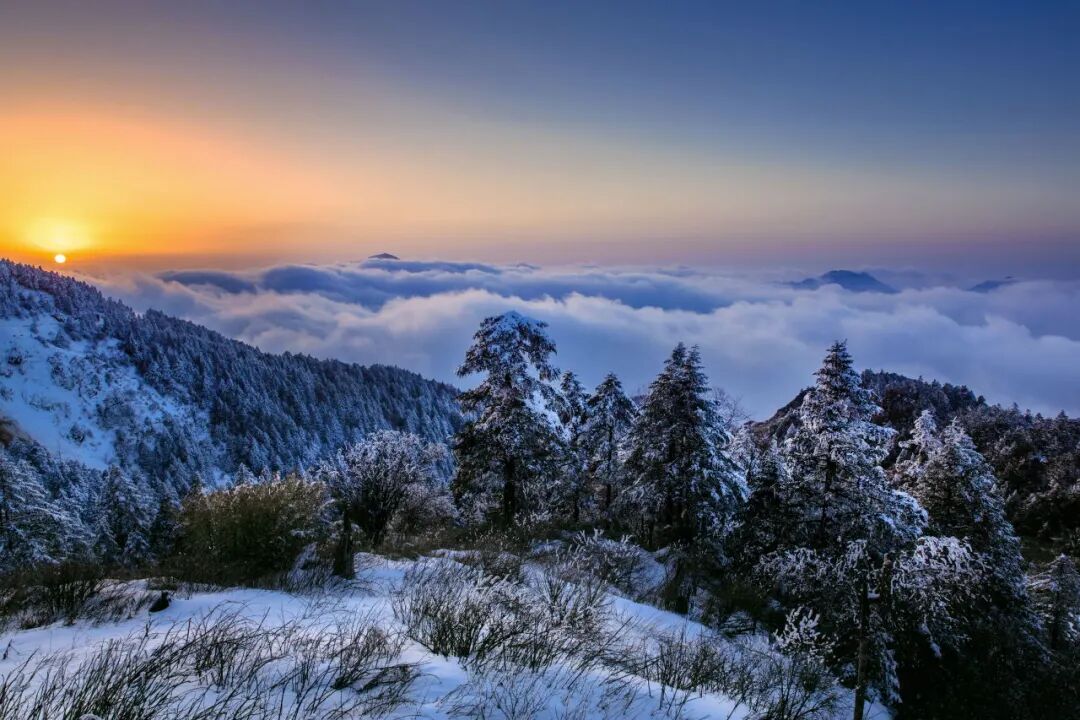
Shennongjia Forestry District, Hubei Province, China
Jiang Rui, Shennongjia Forestry District Culture and Tourism Bureau
Mount Fitz Roy, Argentina: Rooted in Ecology and Community, Building a World-Class Hiking Tourism Destination
Diego Ezequiel Gamboa, Secretary of State for Tourism, Santa Cruz Province, Argentina, and Julieta Andrea Martín Fabrello, President of the Provincial Hotel Association of Santa Cruz Province, Argentina, jointly presented the sustainable development model of Mount Fitz Roy. As Argentina's first World Natural Heritage Site and a world-class mountaineering destination, Mount Fitz Roy strictly protects natural ecology and indigenous culture, restoring the traditional name "El Chaltén" to safeguard local cultural roots.
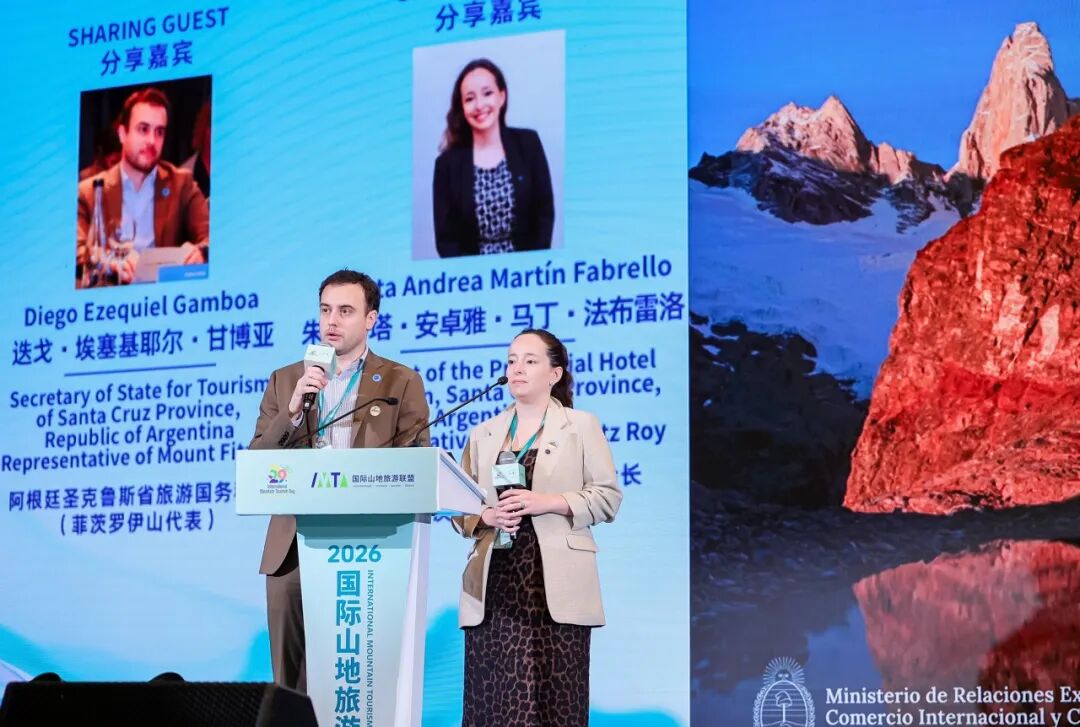
Diego Ezequiel Gamboa, Secretary of State for Tourism, Santa Cruz Province, Argentina, and Julieta Andrea Martín Fabrello, President of the Hotel Association of Santa Cruz Province, Argentina, sharing at the session
Leveraging its unique glaciers, peaks, and forest resources, the region has developed low-impact ecotourism products such as hiking, rock climbing, and glacier sightseeing, establishing the town of El Chaltén as the "National Hiking Capital of Argentina." Tourism has become a pillar of the regional economy and a source of livelihood support. The community participates deeply in tourism operations, with residents becoming direct beneficiaries of ecological protection and tourism development, forming a virtuous cycle of "beautiful ecology, thriving industry, and prosperous people." At the same time, Argentina is strengthening international tourism connectivity by optimizing flight routes and simplifying visas, welcoming global visitors to Patagonia to experience the pristine charm of its mountains.
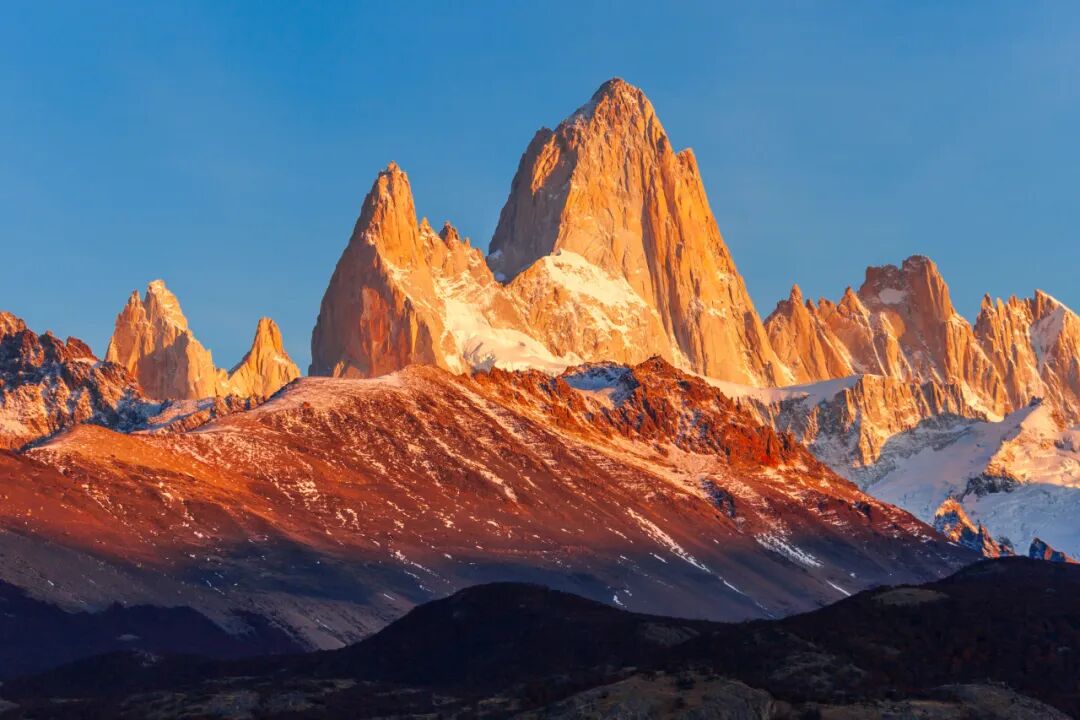
Mount Fitz Roy, Argentina
Tuchong Creative
Soudah Mountain, Saudi Arabia: Redefining the Desert Stereotype, Setting a New Benchmark for Mountain Tourism on the Arabian Peninsula
Srdan Susic, Chief Sustainability Officer, Suda Development Co., Ltd., Saudi Arabia, introduced the unique value of Soudah Mountain. For a long time, Saudi Arabia has been known for its desert image. However, Soudah Mountain, located in the southwest of Saudi Arabia with an elevation of over 3,000 meters, features a cool climate, cloud forests, cliffs and canyons, and rich biodiversity, making it a rare mountain summer resort on the Arabian Peninsula.
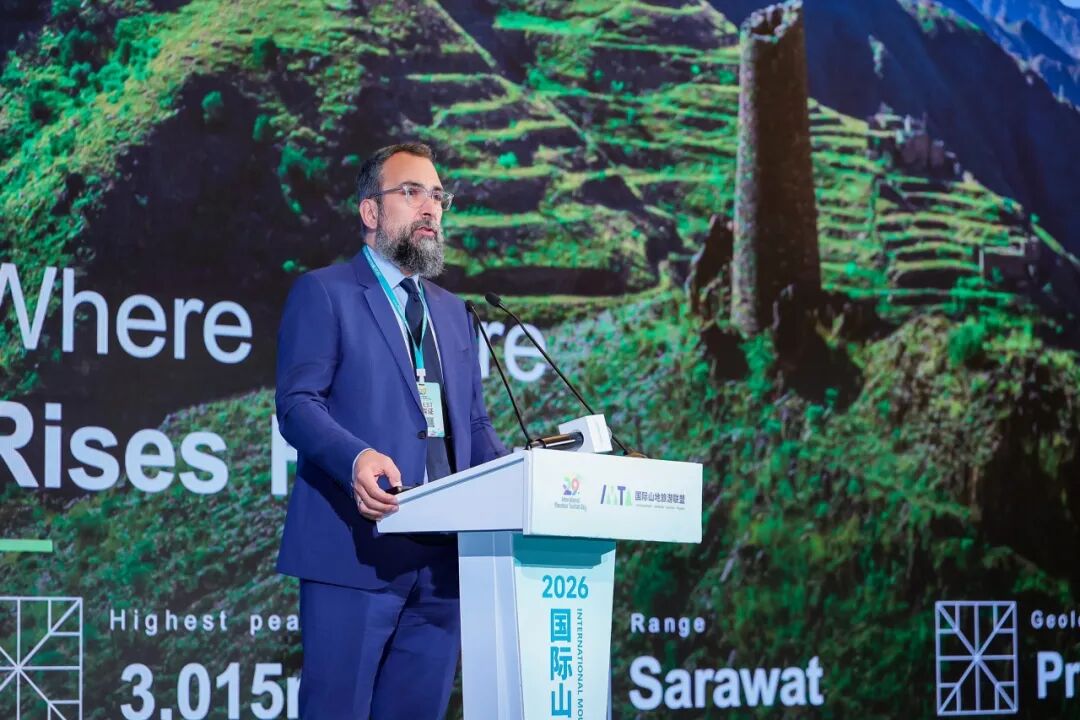
Srdan Susic, Chief Sustainability Officer, Suda Development Co., Ltd., Saudi Arabia, sharing at the session
Leveraging the national transformation strategy, Saudi Arabia has invested heavily to promote the sustainable development of Soudah Mountain, adhering to the principles of ecological priority, cultural heritage, and community coexistence. It strictly protects native landscapes such as juniper forests and valley waterfalls, preserves intangible cultural heritage like Asiri murals, and develops immersive experience products such as mountain hiking, cycling, and leisure vacations. The project integrates ecological protection throughout the planning, construction, and operation processes, holding the line on green and low-carbon development, and is committed to becoming a model of high-resilience, low-impact, sustainable global mountain tourism, aiming to receive 2 million visitors by 2033.
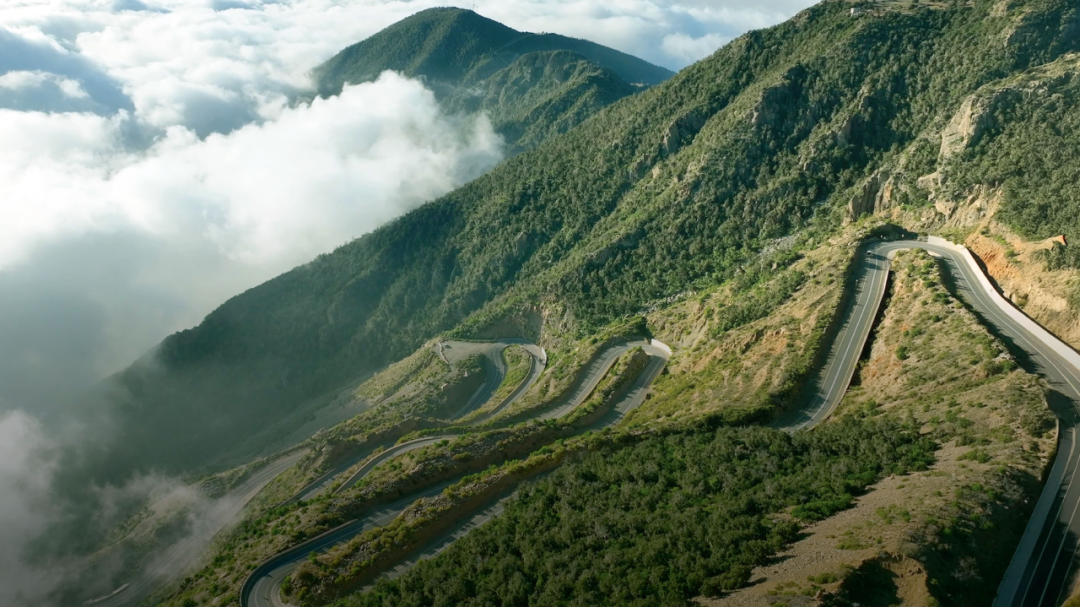
Soudah Mountain, Saudi Arabia
Suda Development Co., Ltd., Saudi Arabia
Mount Danxia, China: Science-Led Protection and Utilization, Telling World Heritage Stories through Ecotourism
Chen Fang, World Geopark Evaluation Expert, Danxiashan Management Committee of Shaoguan, shared Mount Danxia's practical pathway of "science-led mountain, ecotourism." Famous for its unique Danxia landform, Mount Danxia is a Global Geopark and World Natural Heritage Site. Although not high in elevation, it possesses high ecological, scientific, and aesthetic value. Mount Danxia adheres to "strict protection and scientific utilization," building a coordinated system of ecological protection, science education, community participation, and tourism development. It vigorously promotes nature education and study tours, allowing visitors to understand geological changes, biodiversity, and ecological value through experience.
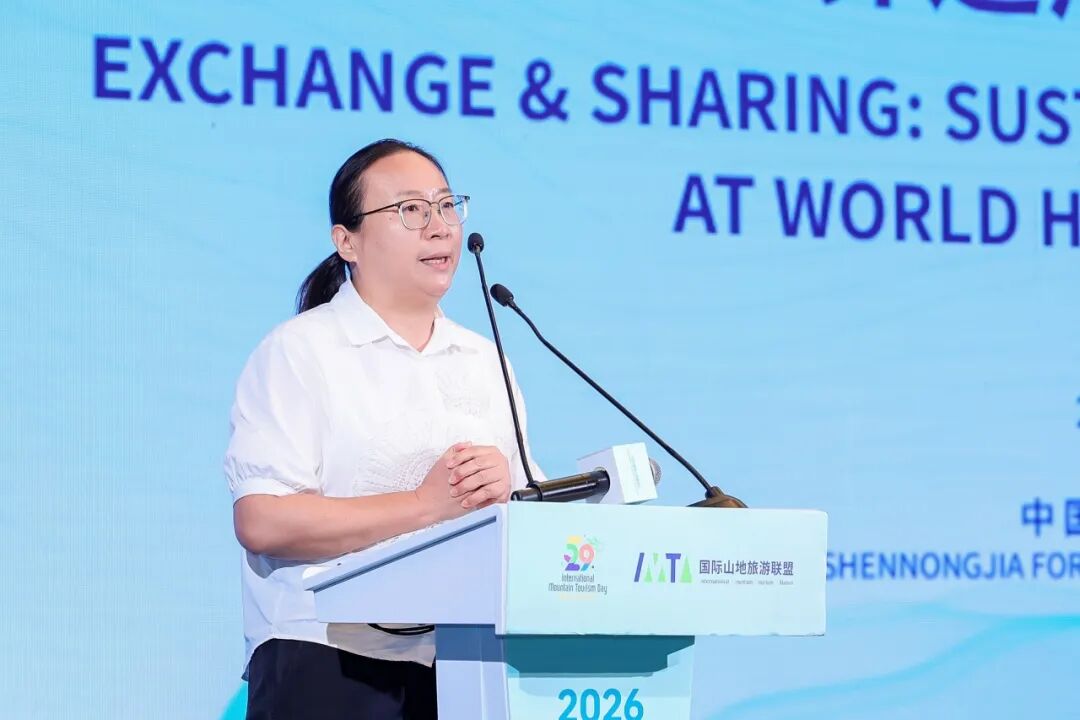
Chen Fang, World Geopark Evaluation Expert, Danxiashan Management Committee of Shaoguan, sharing at the session
Through community co-building, low-carbon operations, and precise management, Mount Danxia has achieved zero damage to the ecological environment and living transmission of cultural heritage, receiving multiple international honors and becoming an excellent example of sustainable development for low-altitude world heritage sites. Mount Danxia is committed to spreading the concept of ecological civilization to the public, turning landscapes into classrooms and scenic areas into think tanks, providing replicable and scalable "Chinese experience" for similar world heritage sites around the world.
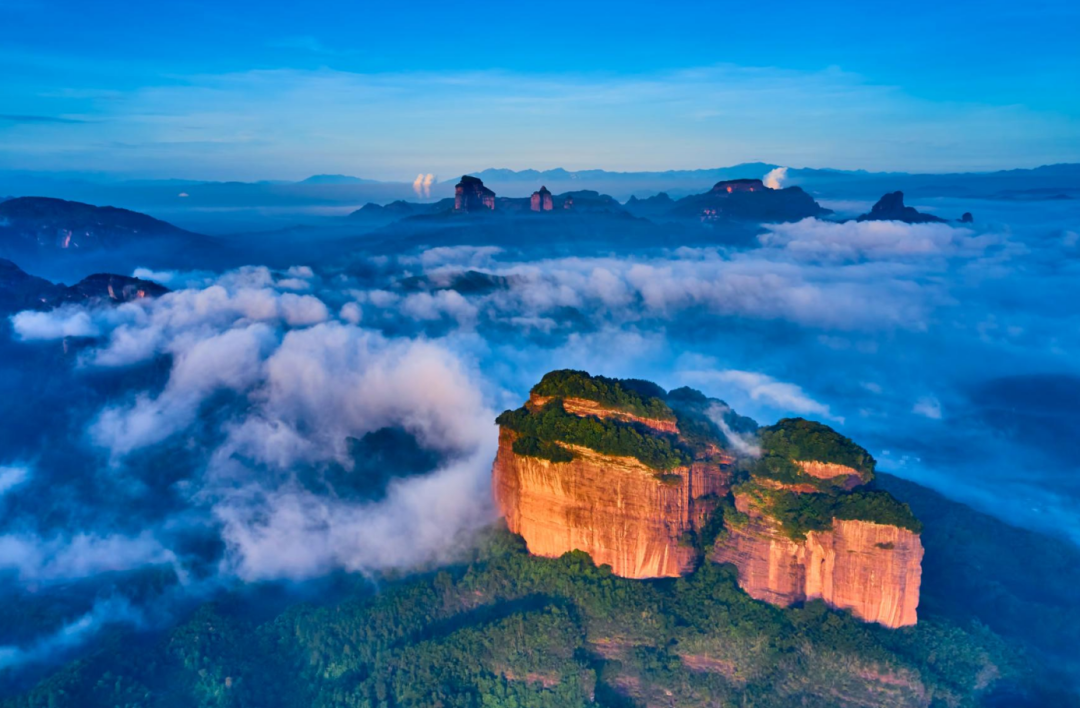
Mount Danxia, Shaoguan, China
Tuchong Creative
Yên Tử Mountain, Vietnam: Dual Protection of Culture and Ecology, Building a Low-Impact Sustainable Tourism System
Đào Duy Tùng, CEO of Tung Lam Development Joint Stock Company, Vietnam, shared Yên Tử Mountain's sustainable development practices. Yên Tử Mountain integrates historical and cultural heritage, beautiful natural landscapes, and traditional architectural relics, and was inscribed on the World Heritage List in 2025. The region adheres to four principles: forest protection, respect for topography, community empowerment, and cultural heritage, adopting a low-environmental-impact development model, optimizing cable car routes and visitor trails to minimize ecological disruption.
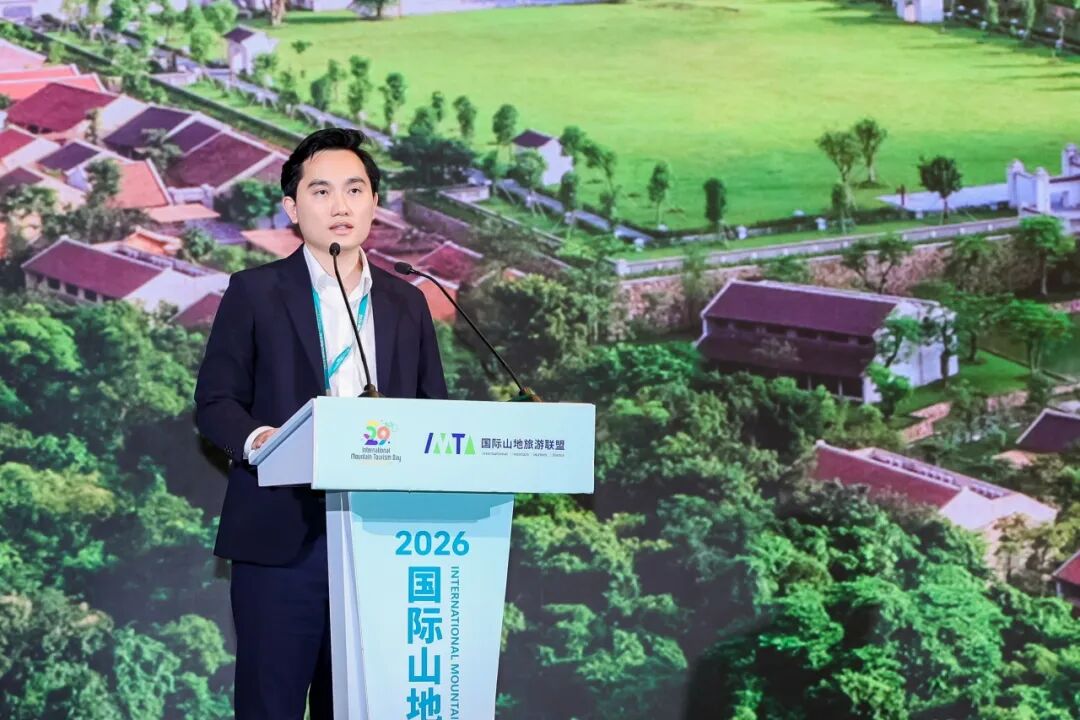
Đào Duy Tùng, CEO of Tung Lam Development Joint Stock Company, Vietnam, sharing at the session
By establishing organic farms, recycling water resources, reducing single-use plastics, and promoting local employment, Yên Tử Mountain has achieved synergy among ecological, economic, and social benefits. Seventy percent of local employees come from surrounding communities, and cultural tourism development has directly increased villagers' incomes, forming a virtuous mechanism of "enterprise-led, community-participating, ecological win-win." With culture as its soul and ecology as its foundation, Yên Tử Mountain continues to improve tourism quality, striving to become a benchmark destination for sustainable mountain tourism in Southeast Asia.
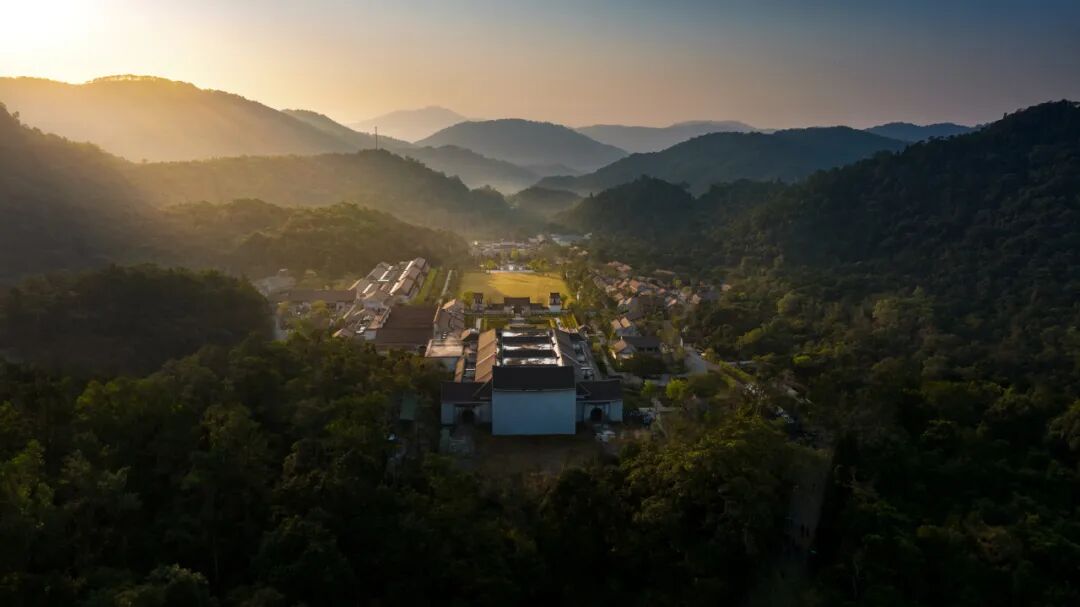
Yên Tử Mountain, Vietnam
Tung Lam Development Joint Stock Company, Vietnam
The five famous mountains have different practical pathways and unique characteristics, yet they collectively demonstrate that the sustainable development of world heritage sites requires upholding the ecological red line, adhering to scientific planning, promoting innovative development, deepening community participation, and advancing international cooperation. This exchange and sharing session was not only a concentrated showcase of global mountain experiences but also a deep transmission of green development concepts, and more importantly, a collective mobilization for global cooperation to advance the sustainable development of mountain tourism.
Taking this dialogue as an opportunity, globally famous tourism mountains will further strengthen collaboration, share conservation experiences, jointly promote business model innovation, expand cooperation spaces, continue to practice the conviction that "lucid waters and lush mountains are invaluable assets," implement the UN 2030 Agenda for Sustainable Development, ensure that world heritage is sustainably passed down through protection, and enable mountain tourism to flourish and develop through innovation, contributing the power of famous mountains to the global construction of ecological civilization and high-quality cultural tourism development.
Text and Image Source:IMTA
Editor Ⅰ: Zhang Congxiao
Editor Ⅱ: Zhang Wenwen
Editor Ⅲ: Zhang Yijing