


On May 29th, the Dialogue among World Famous Mountains 2026, themed "Ecological Conservation and Pathways for Innovative Development of Famous Tourism Mountains," was held in Shennongjia Forestry District, Hubei Province. As a core segment of the International Mountain Tourism Day Theme Events 2026, this Roundtable Dialogue focused on "Striking a Balance between Tourism Development and Ecological Conservation," bringing together international organizations, industry authorities, ecological experts, and cultural tourism practitioners. Participants engaged in in-depth exchanges on issues such as mountain tourism trends, standards development, community coexistence, animal protection, and food system integration, providing actionable models for world heritage mountains and mountain tourism destinations worldwide.
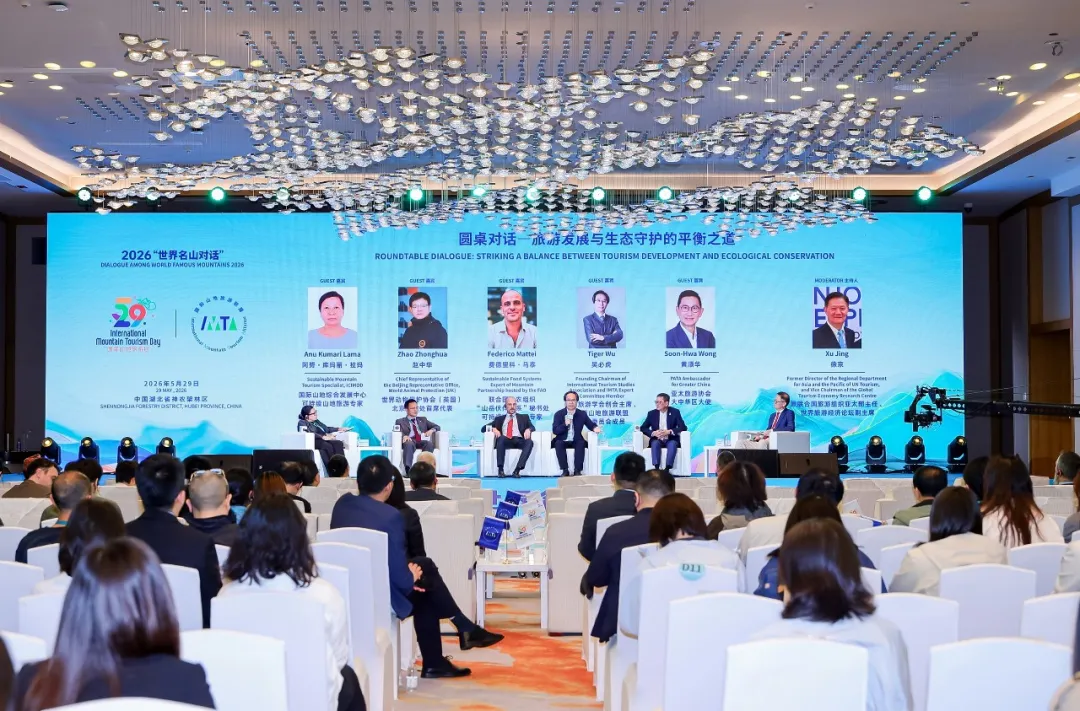
Roundtable Dialogue on "Dialogue among World Famous Mountains 2026"
Xu Jing, Former Regional Director for Asia and the Pacific of UN Tourism, Vice President of Global Tourism Economy Research Centre, and Council Member of International Mountain Tourism Alliance (IMTA), moderated the Roundtable Dialogue. Soon-Hwa Wong, Pacific Asia Travel Association (PATA) Ambassador for Greater China; Tiger Wu, Founding Chairman of the International Tourism Studies Association and IMTA Expert Committee Member; Federico Mattei, Sustainable Food Systems Expert, Mountain Partnership Secretariat (MPS) of Food and Agriculture Organization of the United Nations (FAO); Zhao Zhonghua, Chief Representative of the Beijing Representative Office, World Animal Protection; and Anu Kumari Lama, International Centre for Integrated Mountain Development (ICIMOD)-nominated speaker for the event, shared their insights on relevant topics.
Global tourism is currently accelerating its transition toward green, healthy, and immersive experiences. Leveraging their ecological advantages and wellness value, mountain tourism destinations have become industry hotspots, yet they also face multiple balancing challenges between protection and development, scale and quality, and growth and livelihoods. Xu Jing, Former Regional Director for Asia and the Pacific of UN Tourism, Vice President of Global Tourism Economy Research Centre, and Council Member of IMTA, noted that the core issue of mountain tourism is achieving value transformation and long-term development while holding the line on ecological protection. This was the key consensus of the Dialogue.
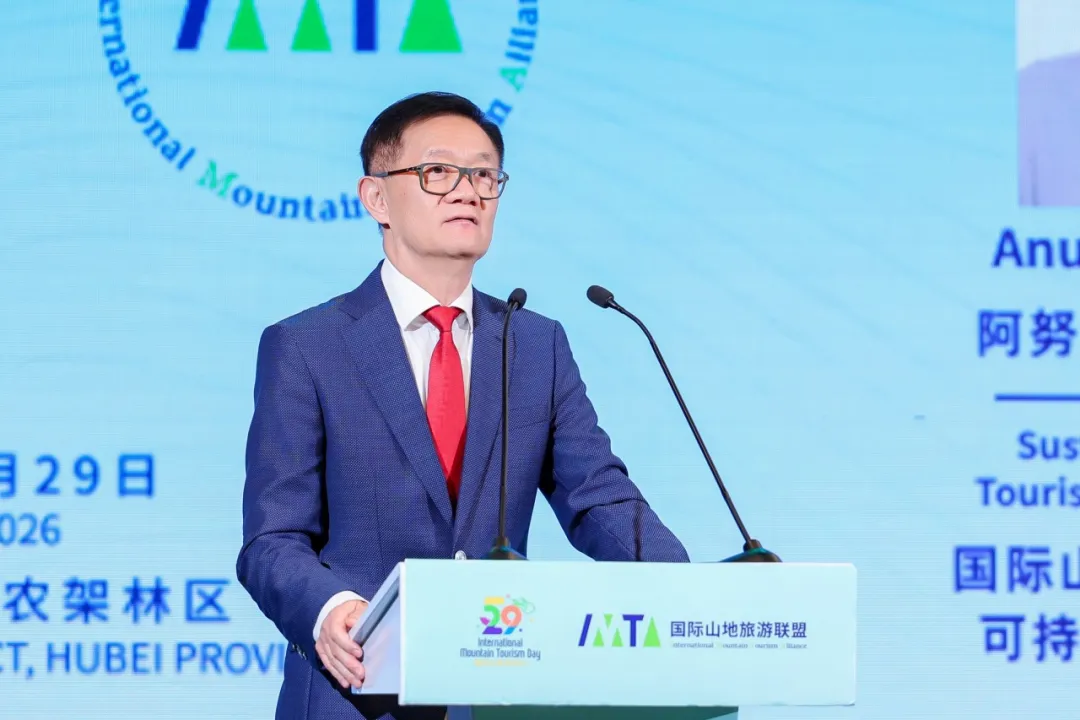
Xu Jing, Former Regional Director for Asia and the Pacific of UN Tourism, Vice President of Global Tourism Economy Research Centre, and Council Member of IMTA, moderating the Roundtable Dialogue
Soon-Hwa Wong, PATA Ambassador for Greater China, highlighted the structural transformation of mountain tourism from a market trends perspective. He stated that tourist demand has shifted from traditional sightseeing to deep healing, emotional connection, and responsible experiences, with forest wellness, biodiversity observation, and cultural immersion becoming more popular. In the future, mountain tourism will no longer compete on visitor numbers but on experience quality, sustainability levels, and emotional value. He suggested that high-quality destinations like Shennongjia Forestry District can increase the share of high-value visitors through smart management, traffic optimization, and scenario innovation, creating greater value with limited visitor flows to achieve a win-win outcome for protection and revenue.
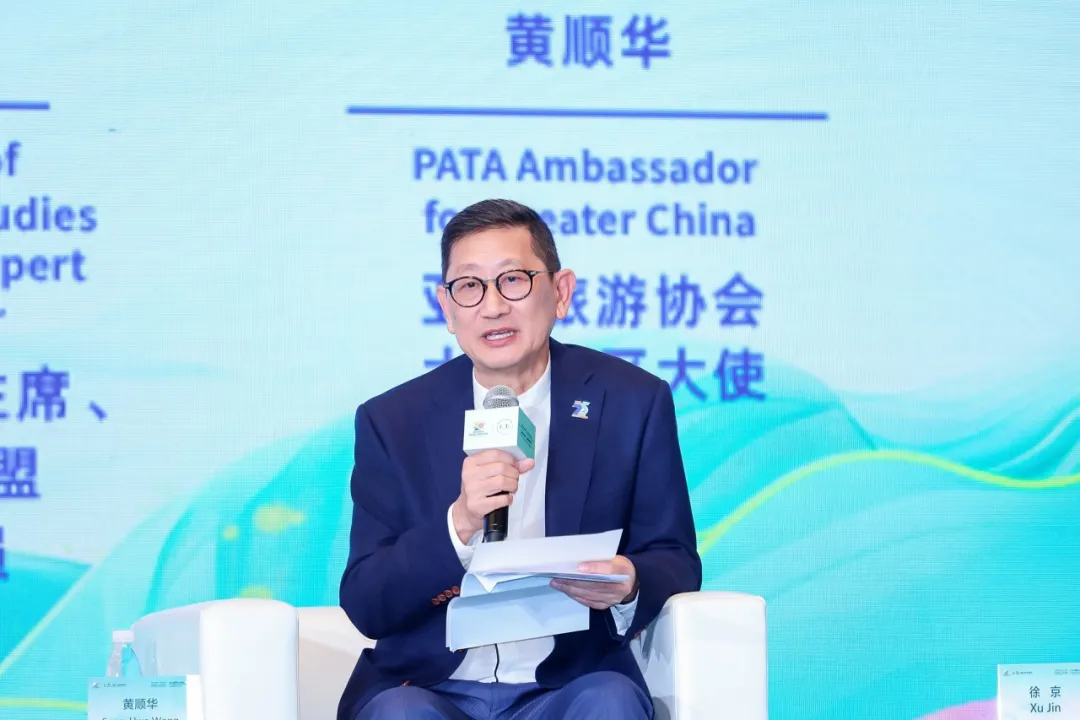
Soon-Hwa Wong, PATA Ambassador for Greater China, sharing his views
Tiger Wu, Founding Chairman of the International Tourism Studies Association and IMTA Expert Committee Member, discussed standards for world-famous tourism mountains and scientific balance. He emphasized that World Famous Tourism Mountains are distinct from ordinary protected areas, combining four key attributes: natural value, cultural heritage, community development, and tourism services. Ecological protection is not about restricting development but about implementing precise measures based on science. Ecological red lines are management tools, not absolute boundaries. They should be managed with differentiated controls depending on the protected objects, seasonal changes, and types of activities, promoting synergy between "strict protection" and "scientific utilization," avoiding one-size-fits-all management, and allowing famous mountains to be revitalized through protection and sustained through development.
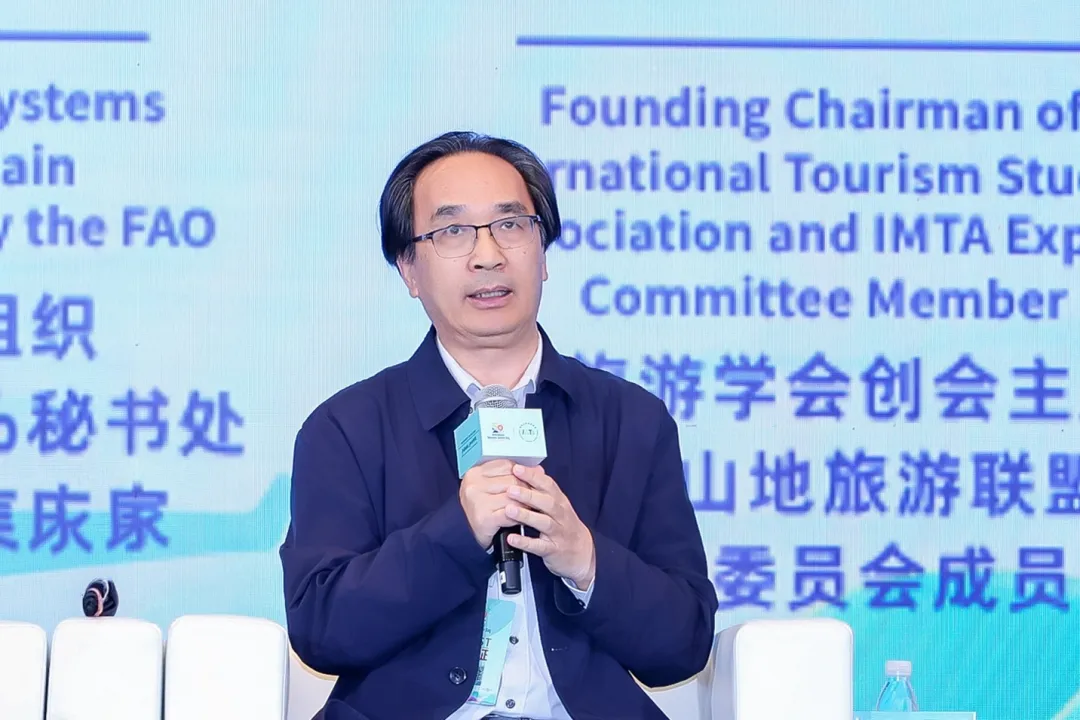
Tiger Wu, Founding Chairman of the International Tourism Studies Association and IMTA Expert Committee Member, sharing his views
Federico Mattei, Sustainable Food Systems Expert, MPS of FAO, built a new tie between tourism and ecology from the perspective of sustainable food systems. He noted that mountains are core carriers of biodiversity and food systems. Tourism can create a virtuous cycle of "protection → benefits → reinvestment in protection" by driving local ingredient consumption and supporting mountain farmers. Tourism practitioners should pay attention to food sources, connect directly with local producers, and empower mountain communities and ecological protection through food and beverage consumption, turning dining tables into a practical platform for sustainable development.
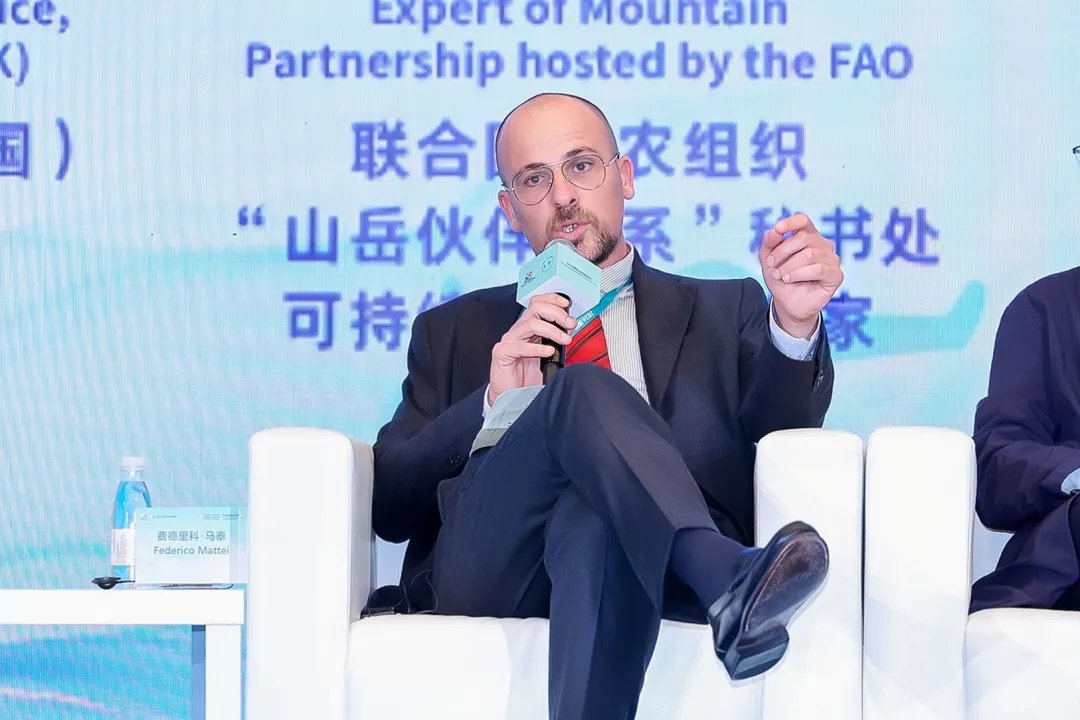
Federico Mattei, Sustainable Food Systems Expert, MPS of FAO, sharing his views
Zhao Zhonghua, Chief Representative of the Beijing Representative Office, World Animal Protection, focused on wildlife-friendly tourism, advocating a "sense of boundary" in protection. He pointed out that mountains are the homes of wildlife, and human tourism activities should maintain a safe distance, replacing contact and interaction with viewing and observation, eliminating disturbance and abuse, thereby ensuring animal welfare and preventing public health risks. He highly praised Shennongjia's achievements in protecting gold snub-nosed monkeys and recommended sharing conservation experience through international cooperation to establish Shennongjia as a global benchmark for wildlife-friendly tourism.
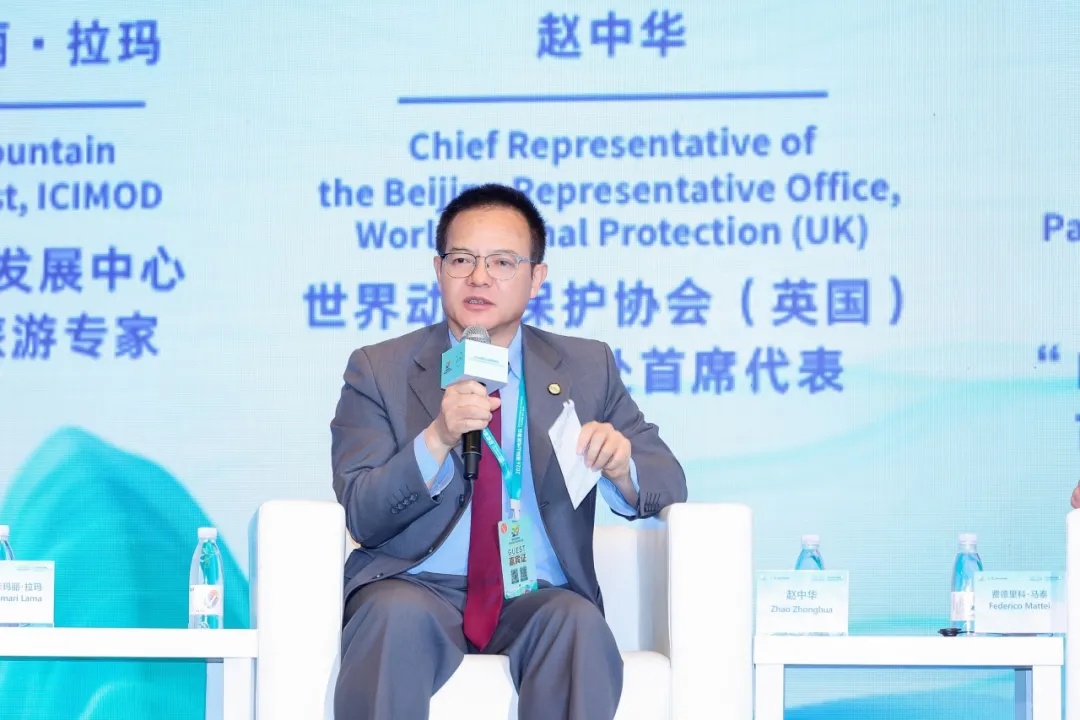
Zhao Zhonghua, Chief Representative of the Beijing Representative Office, World Animal Protection, sharing his views
Anu Kumari Lama, International Centre for Integrated Mountain Development (ICIMOD)-nominated speaker for the event, shared experiences in community co-building and green transition based on practices in the Hindu Kush-Himalayan region. She proposed that mountain tourism must be rooted in communities, advancing a trinity of policy coordination, capacity building, and green operations, shifting from "scale growth" to "quality improvement." Through local procurement, low-carbon operations, and support for small and micro businesses, communities can become both the subjects of protection and the beneficiaries. She called for accelerated cooperation among the world's famous mountains, turning consensus into action, and addressing climate change and ecological pressures through regional collaboration.
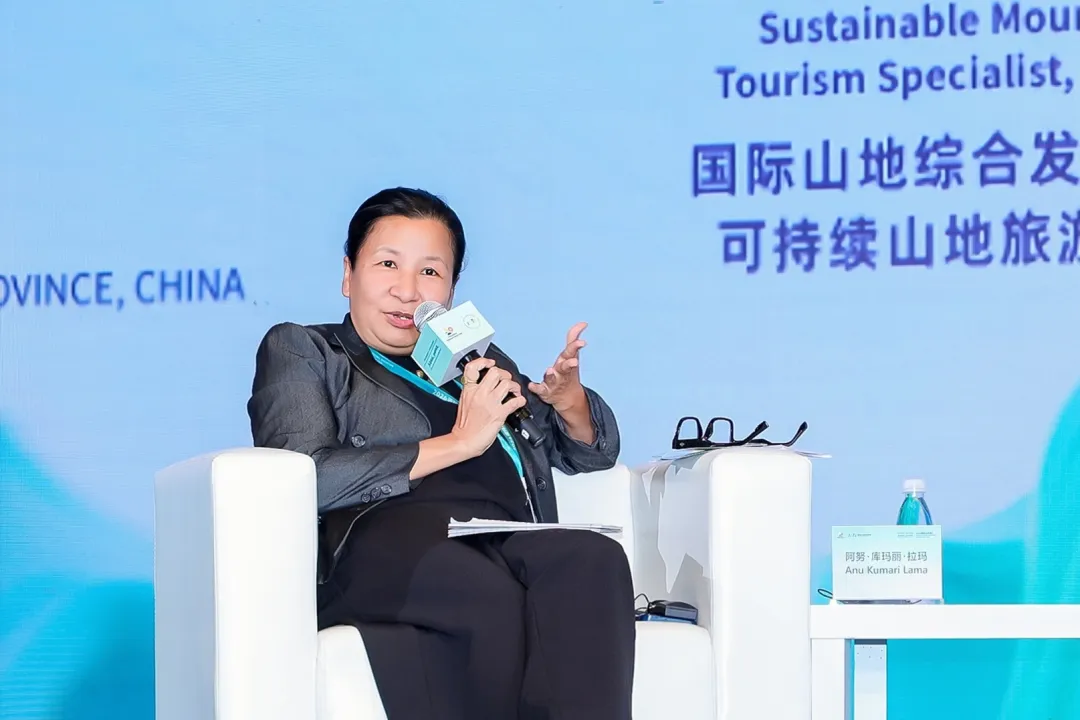
Anu Kumari Lama, International Centre for Integrated Mountain Development (ICIMOD)-nominated speaker for the event, sharing her views
The five experts' views converged to form clear guidance: ecological protection is the bottom line, innovative development is the driving force, community sharing is the foundation, and international coordination is the safeguard. This aligns closely with the principles of the Shennongjia Declaration and charts a path for the sustainable development of global mountain tourism — upholding ecological red lines, promoting industry upgrading, strengthening community participation, deepening international cooperation, and ensuring that world heritage is passed down through generations empowered by tourism.
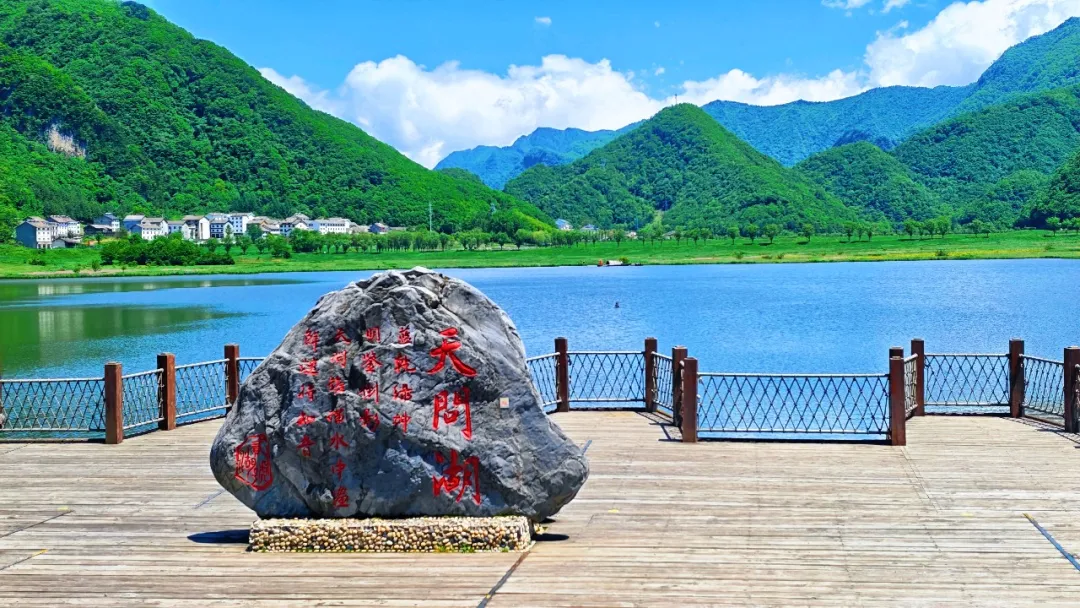
Shennongjia Forestry Distric
Image Source:Yuan Jiali
As a high-level discussion for intellectual exchange in the international mountain tourism sector, this Roundtable Dialogue not only built industry consensus but also delivered actionable solutions. Participating experts agreed that Shennongjia's practices of top-tier protection, green development, and livelihood sharing provide a Chinese model of "harmonious coexistence between humans and nature" for the world. Moving forward, IMTA will continue to build platforms for exchange, promote the implementation of outcomes, enable more famous mountains to develop while being protected and to be protected while developing, transform ecological strengths into development advantages, harness the power of mountain tourism to support the realization of the UN 2030 Agenda for Sustainable Development, and extend the benefits of world heritage to all of humanity.
Text and Image Source:IMTA
Editor Ⅰ: Zhang Congxiao
Editor Ⅱ: Zhang Wenwen
Editor Ⅲ: Zhang Yijing