


For many, the first impression of Malaysia is the modern skyline of Kuala Lumpur's Petronas Twin Towers, or the artistic charm of Penang's street art. But if you take a few steps deeper into its history, you'll find that this country, split into two halves by the South China Sea, is a "living history book" written in multiple languages.
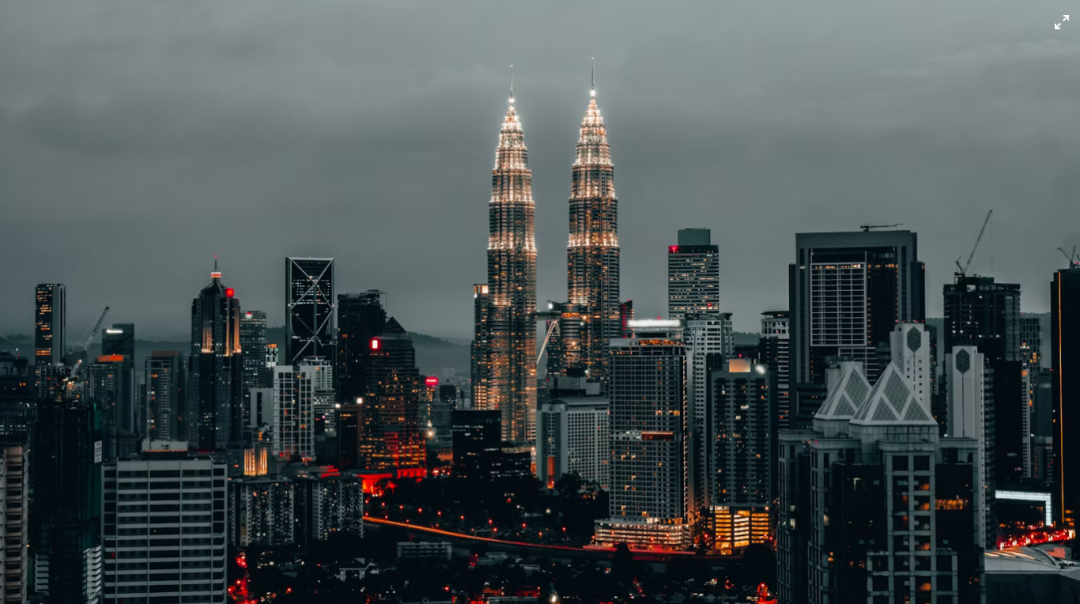
Malaysia. Source: unsplash.com@Chander Mohan
Malaysia's history is one of convergence and fusion among diverse ethnic groups. As early as the first century AD, this land had already appeared in the maritime records of Indian traders. Over the following millennia, merchants, immigrants, and colonizers from India, Arabia, China, and Europe arrived one after another, each leaving their own mark. This layering of multiple cultures is vividly reflected in today's tourist attractions—every seemingly ordinary corner may hold stories from different eras and different peoples.
01 Melaka: Jonker Street – Reading 600 Years of the "Southward Migration"
Melaka is Malaysia's oldest city, founded in 1403. Situated at the strategic choke point of the Strait of Malacca—one of the world's busiest shipping lanes—it was destined for greatness from the moment it was established. In the 15th century, the Malacca Sultanate rose to prominence, becoming one of Southeast Asia's key trading ports, with ships from India, Arabia, China, and the Southeast Asian archipelago gathering here.
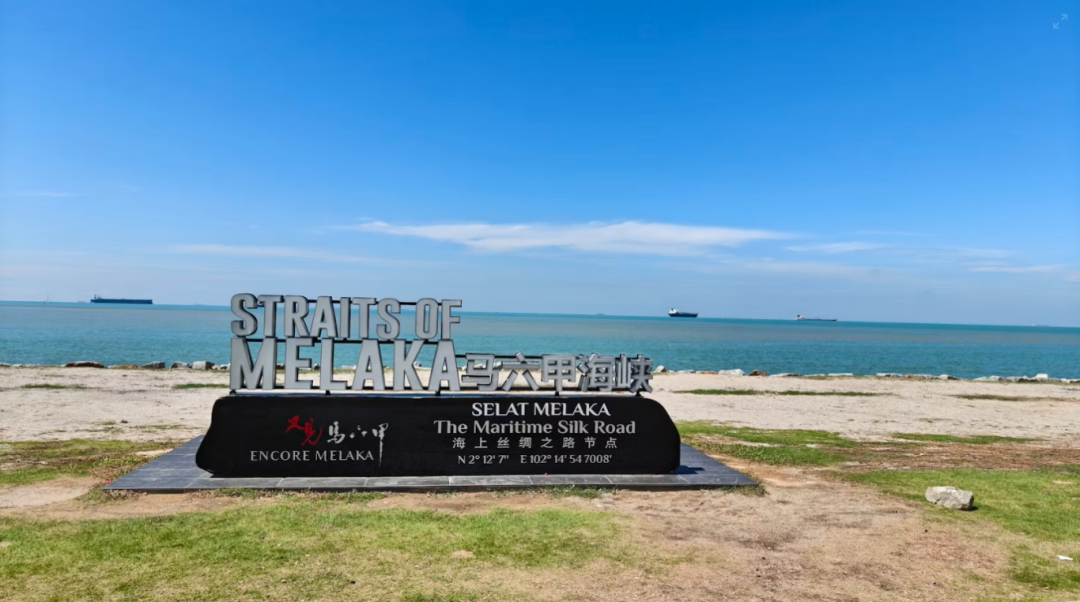
Strait of Malacca. Source: unsplash.com@Nick Young
The name of Zheng He is closely tied to Melaka. The Ming Dynasty admiral made seven voyages to the Western Seas, calling at Melaka five times. His massive fleet brought not only silk, porcelain, and tea, but also a spirit of peaceful exchange. Zheng He established a "depot" in Melaka as a transit and supply station for his fleet. These efforts greatly boosted Melaka's prosperity and laid the foundation for subsequent Chinese migration southward.
Jonker Street is the heart of Melaka's historic district. Lined with rows of shophouses featuring traditional Chinese guardian lion door knockers and carved lattice windows alongside Nanyang-style shutters and colorful ceramic tiles, the narrow street creates a sense of temporal dislocation, as if stepping back into a small southern Chinese town of the late Qing or early Republican era.
What makes Jonker Street fascinating is its nurturing of the unique Peranakan (Baba-Nyonya) culture. The Peranakan are the descendants of early Chinese immigrants who intermarried with local Malays—men are called "Baba" and women "Nyonya." This community preserved traditional Chinese customs such as ancestral worship during the Lunar New Year and wedding ceremonies, while also absorbing Malay language, dress, and culinary influences. At the Baba-Nyonya Heritage Museum, you can see the ingenious combination of Chinese rosewood furniture and Malay-style batik textiles, with ancestral tablets placed beside traditional Malay utensils. Two seemingly disparate cultures achieve a harmonious coexistence here.
Crossing the Tan Kim Seng Bridge over the Melaka River, another side of history unfolds. The red-walled buildings of Dutch Square are the legacy of 17th-century Dutch colonizers; the ruins of St. Paul's Church record the years of Portuguese rule; and the A'Famosa Santiago Gate is all that remains of the fortress built by the Portuguese in 1511. In one small city, ruled successively by the Malay Sultanate, Portuguese, Dutch, and British, a walk through its streets is like flipping through half a volume of Southeast Asian colonial history.
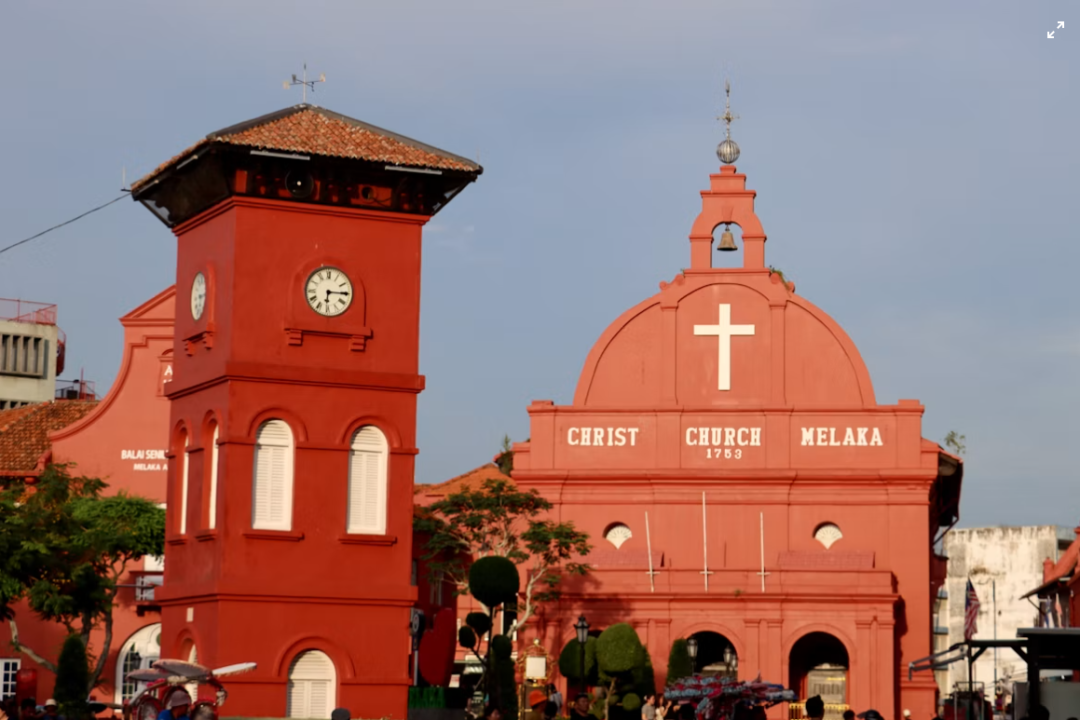
Dutch Square. Source: unsplash.com@Taha
02 Batu Caves: An Indian Sacred Site and Wartime Memory Above 272 Steps
Leaving Melaka, we head to Batu Caves, 13 kilometers north of Kuala Lumpur. Home to limestone hills over 400 million years old, this is also one of the most famous Hindu shrines outside India. The 43-meter-tall statue of Lord Murugan and the 272 colorful steps leading to the main cave have long been social media favorites.
Batu Caves is dedicated to Lord Murugan, the son of Shiva, one of Hinduism's principal deities. Hindu scriptures recount that Murugan slayed a demon here, which is why the site is revered as sacred. What truly established Batu Caves as a religious center was the efforts of the Indian community leader K. Thamboosamy Pillai in the late 19th century. Around 1890, he dreamt that the goddess instructed him to establish a shrine for the deity here, and in 1892, the first Thaipusam festival was held. Today, during the Thaipusam festival in late January or early February each year, hundreds of thousands of devotees from around the world carry ornate "kavadi" structures and climb the 272 steps barefoot—a spectacular sight.
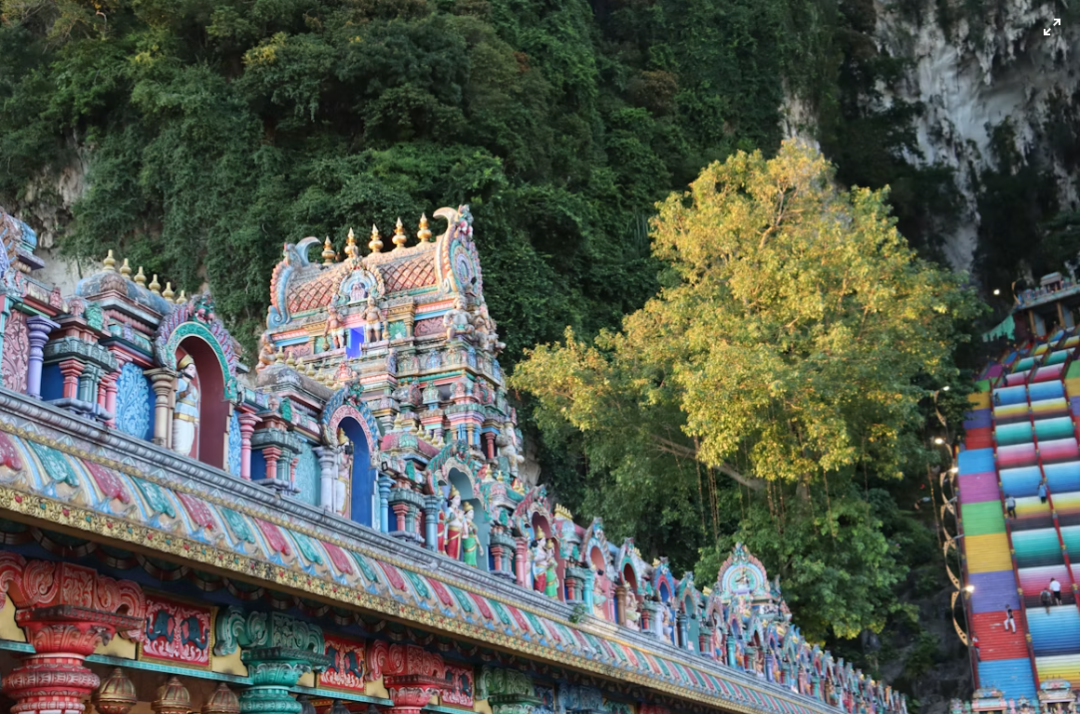
Batu Caves. Source: unsplash.com@Alicja Ziajowska
Batu Caves is not only a place of divinity but also bears the scars of war. On September 1, 1942, the Malayan People's Anti-Japanese Army held a secret meeting here, but due to a leak, they were surrounded by Japanese forces, and 18 members were killed. As you ascend the steps, take a moment to read the memorial inscriptions inside the cave—they are a reminder of a bloody chapter that should not be forgotten.
03 George Town, Penang: Street Art and Chinese Clan Memories
George Town, the capital of Penang, was also inscribed as a UNESCO World Heritage Site in 2008. The series of street murals created by Lithuanian artist Ernest Zacharevic in 2012—such as Kids on a Bicycle and Boy on a Chair—have become icons of the city, drawing countless visitors to wander the century-old streets in search of more murals. But George Town is far more than just an artistic haven; it is a living museum of Chinese immigrant history.
The Khoo Kongsi is one of Penang's most magnificent Chinese clan houses, built in the mid-19th century by the Khoo clan from Zhangzhou, Fujian. Entering the Khoo Kongsi, you'll find exquisite wood carvings, ornate gold leaf decorations, and brilliant painted murals—each detail reflecting the wealth and status accumulated by Chinese immigrants who established themselves in a foreign land. For the Chinese of that era, the clan house was more than a building; it was a spiritual home, a symbol of "not losing one's roots" even when separated from the homeland.
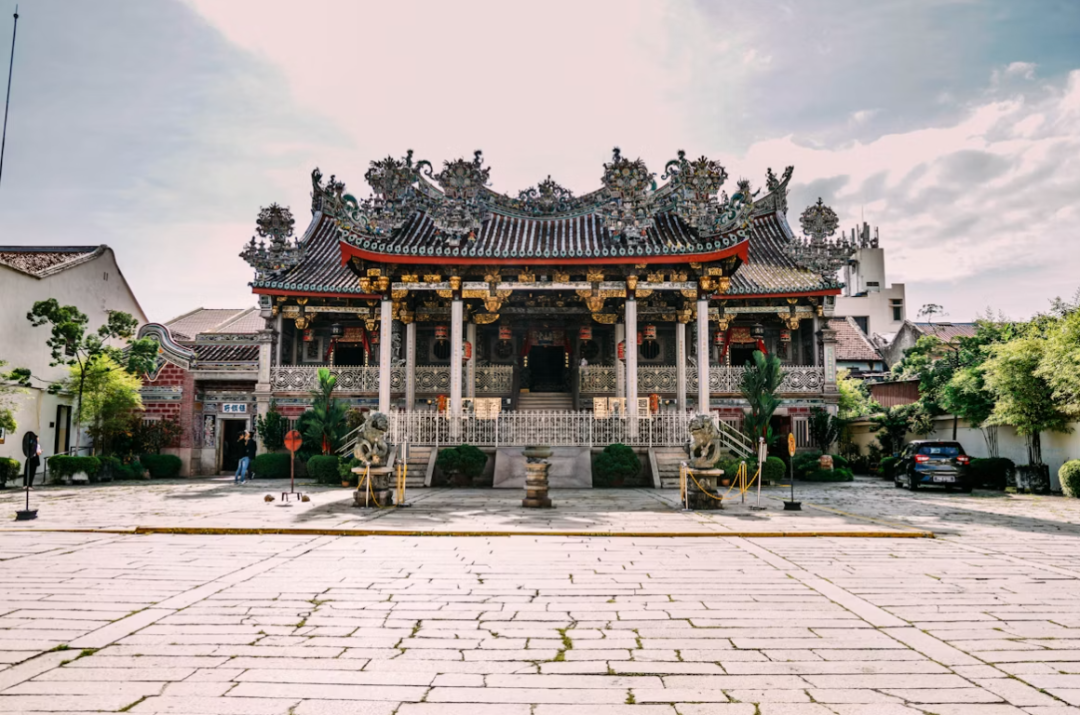
George Town. Source: unsplash.com@Nimalan nims
Nearby, the Pinang Peranakan Mansion, also known as the "Blue Mansion," is equally worth a visit. This mint-green complex is one of Malaysia's largest remaining Peranakan buildings, originally the residence of 19th-century Chinese Kapitan Chung Keng Quee. It blends Chinese wood carvings, European wrought iron, and Malay-style tiles—another testament to the Peranakan culture.
This article was compiled by the International Mountain Tourism Alliance (IMTA) through its "Two Microblogs and One Website" integrated platform.
Some images are sourced from the internet for sharing purposes only; if any infringement occurs, they will be removed.
First Review: Zhang Congxiao
Second Review: Bao Gang
Third Review: Pan Kaiyue