


The Wuyi Mountains stretch for over a thousand miles, forming a natural barrier in western Fujian. Their highest peak, Mount Huanggang, rises to 2,157 meters and is known as the "Roof of East China." From the foothills to the summit, evergreen broadleaf forests, mixed broadleaf-conifer forests, bamboo forests, dwarf forests, and meadows each dominate at different elevations. This distinct vertical vegetation distribution is extremely rare at this latitude.
Hundreds of millions of years ago, intense tectonic activity created a series of beaded red basins in the Wuyi Mountains, which gradually evolved into the magnificent Danxia landform seen today. The mountains stand like brocade screens, while the waters echo like the sound of a zither. Together, the Nine-Bend Stream and the Danxia peaks form the classic scene of "clear waters and crimson peaks."
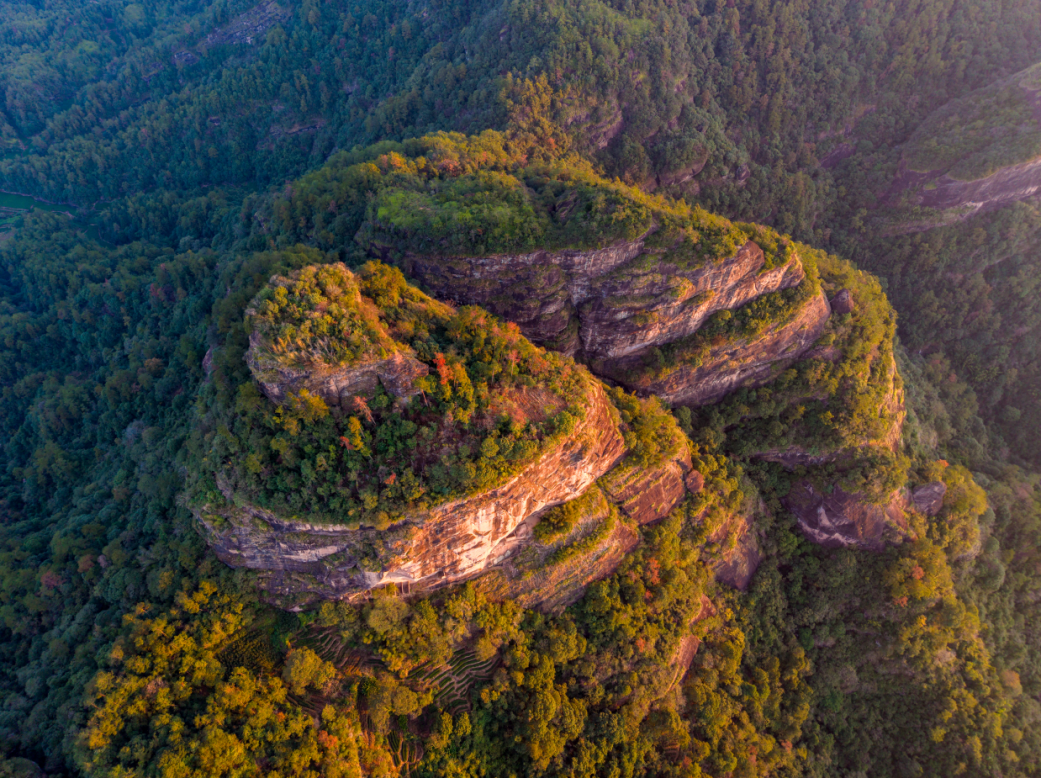
Mount Wuyi. Source: Tuchong
The Nine-Bend Stream is the soul of Mount Wuyi. It originates from the southwestern foothills of Mount Huanggang and stretches approximately 9.5 kilometers in length, earning its name from the three bends and nine twists of its course. The mountains guide the water as it turns, and the water flows around the mountains — each bend offering a different view. Along its banks are scattered thirty-three peaks and ninety-nine rocks, preserving the most complete mid-subtropical primary forest ecosystem at this latitude in the world. Drifting downstream on a bamboo raft — a way of touring that has continued since the Tang and Song dynasties — takes about two hours. Looking up, you see mountain scenery; looking down, you are greeted by the colors of the water.
Mount Wuyi is the most "significant" mountain in Fujian — a UNESCO World Cultural and Natural Heritage site, a distinction shared by only four places in all of China.