


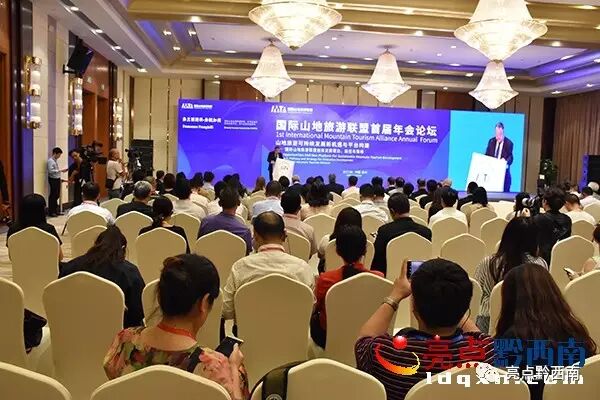
On the afternoon of August 15, 2017, the First International Mountain Tourism Alliance Annual Fourm was held at the Fukang International Convention and Exhibition Center in Xingyi City, Qianxinan Buyei and Miao Autonomous Prefecture.
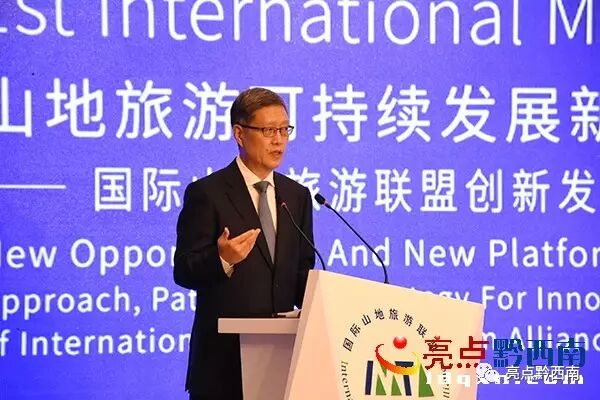
He Yafei, Secretary-General of the International Mountain Tourism Alliance, presided over the keynote speeches of the first session of the forum.
On the afternoon of August 15, the First Annual Forum of the International Mountain Tourism Alliance took place at the Fukang International Convention and Exhibition Center in Xingyi, Qianxinan Buyei and Miao Autonomous Prefecture. Distinguished guests engaged in in-depth discussions and exchanges centered on the theme of "New Opportunities and Platform Construction for the Sustainable Development of Mountain Tourism".
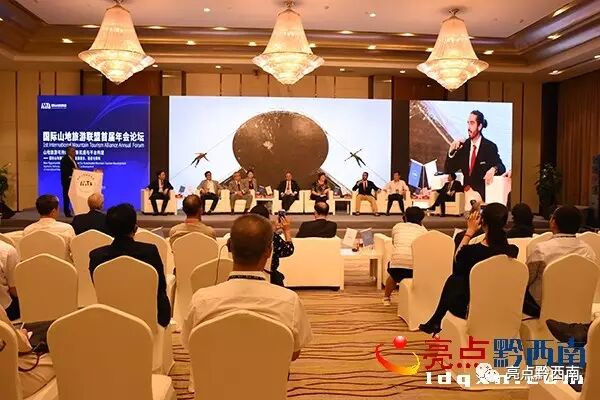
The forum was divided into two sessions. The first session, featuring keynote speeches, was hosted by He Yafei, Secretary-General of the International Mountain Tourism Alliance. The second session, which focused on guest discussions, was chaired by David De Val, Special Advisor to the Chief Executive Officer of the Pacific Asia Travel Association (PATA).
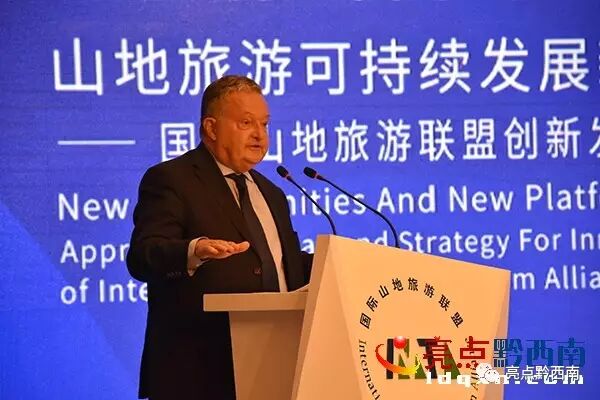
Francesco Frangialli, Honorary Secretary-General of the World Tourism Organization (UNWTO), delivered a speech titled "The Status and Role of Mountain Tourism in the Sustainable Development Goals under the UN Framework". He stated that 2017 marked the second year of the implementation of the Sustainable Development Goals (SDGs) and also the UN-designated International Year of Sustainable Tourism for Development. Tourism has the potential to drive the achievement of all SDGs, with particular significance for Targets under Goal 8 (Decent Work and Economic Growth) and Goal 12 (Responsible Consumption and Production). These two goals, which emphasize sustainable and inclusive economic growth as well as sustainable production and consumption patterns respectively, are closely aligned. They underscore tourism's pivotal role in boosting employment and preserving indigenous cultures, while also promoting sustainable production and consumption models.
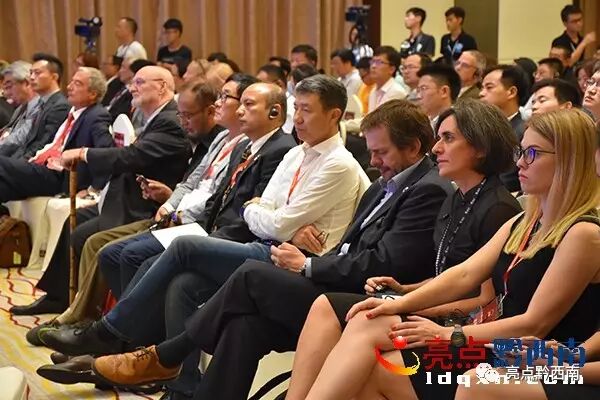
Ike Halijono from the Asian Caving Federation addressed the question "How to find an ideal approach to sustainable tourism development?" He emphasized three key principles. Firstly, we must protect landscapes through well-formulated conservation plans. Secondly, we need to ensure the income growth of local residents. Thirdly, we should enhance environmental protection efforts. Therefore, tourism serves as a viable solution to address challenges in karst areas. To safeguard the unique karst landscapes, meticulous planning is essential, with the aim of nominating these landscapes for inclusion as World Natural Heritage sites. The presentation of surface and cave landscapes in karst regions should transcend superficial recreational activities and adopt more sophisticated forms. Environmental monitoring is crucial for effective environmental management in these areas. Moreover, the participation of local communities and residents is indispensable for the sustainable management of karst scenic spots. Safety is another top priority, requiring the establishment of safety protocols, standardized procedures, and a strong focus on education and training initiatives.
Wei Xiao'an, a renowned Chinese expert in tourism economics, delivered speeches themed "Sustainable Development of Global Mountain Tourism" and "The Philosophy and Innovative Development of the Mountain Tourism Alliance". He noted that China, as a country with extensive mountainous areas, is naturally poised to become a major player in mountain tourism, making the International Mountain Tourism Alliance particularly significant for China. Regarding Guizhou, the well-known slogans "Guizhou: A Provincial Mountain Park; Colorful Guizhou Style" have elevated the province to global prominence. To further internationalize Guizhou, he summarized 20 key aspects of internationalization, including adopting a global perspective to identify gaps through horizontal comparisons, embracing advanced ecological civilization concepts, fostering forward-thinking international mindset, attracting comprehensive international capital investment, developing innovative international mechanisms, promoting development-oriented international cooperation, participating in formulating international rules, accessing international markets, and engaging in international division of labor. Historically, developed and developing countries have mainly engaged in vertical division of labor in the tourism sector, while developed countries have adopted horizontal division of labor among themselves. In the mountain tourism economy, efforts should be made to drive a "blowout" growth in the tourism industry, strive to build Guizhou into an international mountain tourism destination and a major mountain tourism province, and ensure that more people can share the benefits of tourism development. In 2016, Guizhou received 531 million tourist arrivals and achieved a total tourism revenue of 502.7 billion yuan, representing year-on-year increases of 41% and 43% respectively. In the first half of this year, the province welcomed 351 million tourists and generated a total tourism revenue of 314 billion yuan, with year-on-year growth rates of 36.56% and 40.12% respectively.
This international exchange and dialogue event on green development and mountain tourism brought together elite professionals from home and abroad. It is believed that through direct mutual understanding and joint participation, this event will yield positive outcomes in advancing the protection and utilization of mountain ecosystems and promoting the development of mountain tourism. On the morning of the same day, the International Mountain Tourism Alliance, the world's first international organization dedicated to mountain tourism, was officially inaugurated in Guizhou. Initiated by Guizhou Province and approved by the State Council of the People's Republic of China, the alliance aims to be developed into an influential international organization in the global tourism industry. It will play a more significant role in shaping global mountain tourism development, formulating mountain tourism standards, developing mountain tourism products, promoting investment cooperation in the mountain tourism sector, and facilitating international cultural and people-to-people exchanges. We will fully absorb the achievements of this dialogue event and the wisdom shared by the participating guests, promote positive interaction between ecological civilization construction and mountain tourism development, and strive to enhance Guizhou's mountain ecological environment, boost its tourism economy, and improve the well-being of local people.
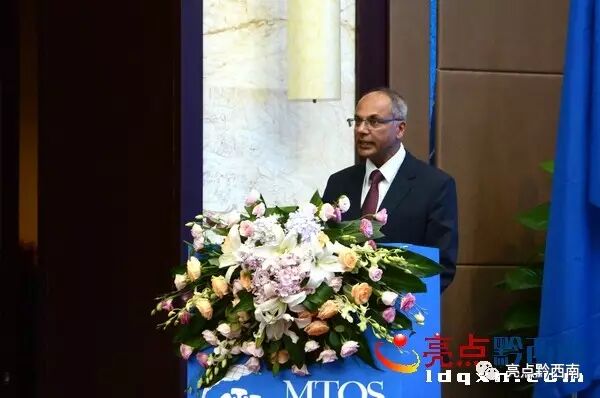
Purna Bahadur Pandey, Economic Minister of the Embassy of Nepal in China, delivered an address. In his speech, he pointed out that Guizhou and Nepal share many similarities, including abundant mountainous resources, rich historical heritage, traditional rural settlements, and eco-friendly lifestyles. Both regions also face similar challenges, such as protecting fragile mountain ecosystems and ensuring the sustainability of tourism products. Adventure tourism activities in areas like the Himalayas offer unique experiences to tourists. He expressed that China and Nepal can cooperate in meeting tourist demands and achieve common development. He also hoped that both sides can share knowledge and technologies to create a better future, and reaffirmed Nepal's willingness to participate in cooperation. Finally, he thanked the organizers for hosting this excellent conference, which provided a platform for all stakeholders to gather and exchange experiences in mountain tourism.
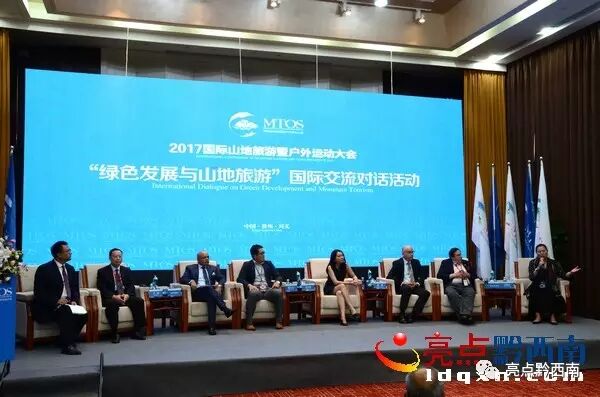
After brief opening remarks, the event proceeded with panel discussions themed "Lucid Waters and Lush Mountains Are Invaluable Assets", "Mountain Tourism Leads the Development of the '8+N' Modern Industrial System", and "Guizhou's Opportunities from a Global Perspective".
In the panel discussion on "Lucid Waters and Lush Mountains Are Invaluable Assets", Li Sanqi, Director of the Guizhou Provincial Tourism Development Commission, stated that plains were the main advantage for development during the agricultural civilization era, coastal areas took the lead in development during the industrial civilization period, and mountainous regions have emerged as the new advantage in the era of ecological civilization. "The prosperity of ecology leads to the prosperity of civilization". The historical logic and laws that humanity has followed represent a sacred process of civilizational progress.
Harvey, former Vice President of the American Broadcasting Company (ABC), shared insights on how Guizhou can carry out positive and beneficial green cooperation with the international community.
Distinguished participants, including leaders, foreign envoys to China, leaders of international chambers of commerce, and media representatives, engaged in in-depth exchanges on the topics of green development and mountain tourism.
Ha Siting, Deputy Director of the Publicity Department of the CPC Guizhou Provincial Committee, Director of the Foreign Publicity Office of the CPC Guizhou Provincial Committee (Information Office of the Guizhou Provincial People's Government), and Head of the Publicity Group for the 2017 International Mountain Tourism and Outdoor Sports Conference, participated in the panel discussions.
Li Sanqi, Director of the Guizhou Provincial Tourism Development Commission, also joined the panel discussions.