


On May 29, the 2026 International Mountain Tourism Day Theme Events opened in Shennongjia Forestry District, Hubei Province. Themed "Preserving World Heritage, Sharing the Prosperity of Famous Mountains — Zhiyin Hubei, Mysterious Shennongjia," the event brought together international organizations, foreign embassies and consulates in China, industry experts, and media representatives from around the world to explore pathways for the coordinated development of ecological protection and cultural tourism. The program featured the Opening Ceremony, the 2026 Dialogue among World Famous Mountains, the Investment and Business Meeting for Mountain Culture and Tourism, and a series of other events. Guests participated in various formats, sharing cutting-edge ideas and deepening practical cooperation. Lu Lin, Director of Shennongjia Forestry District Culture and Tourism Bureau, Hubei Province delivered a speech at the “Dialogue among World Famous Mountains 2026” Exchange and Sharing Session.
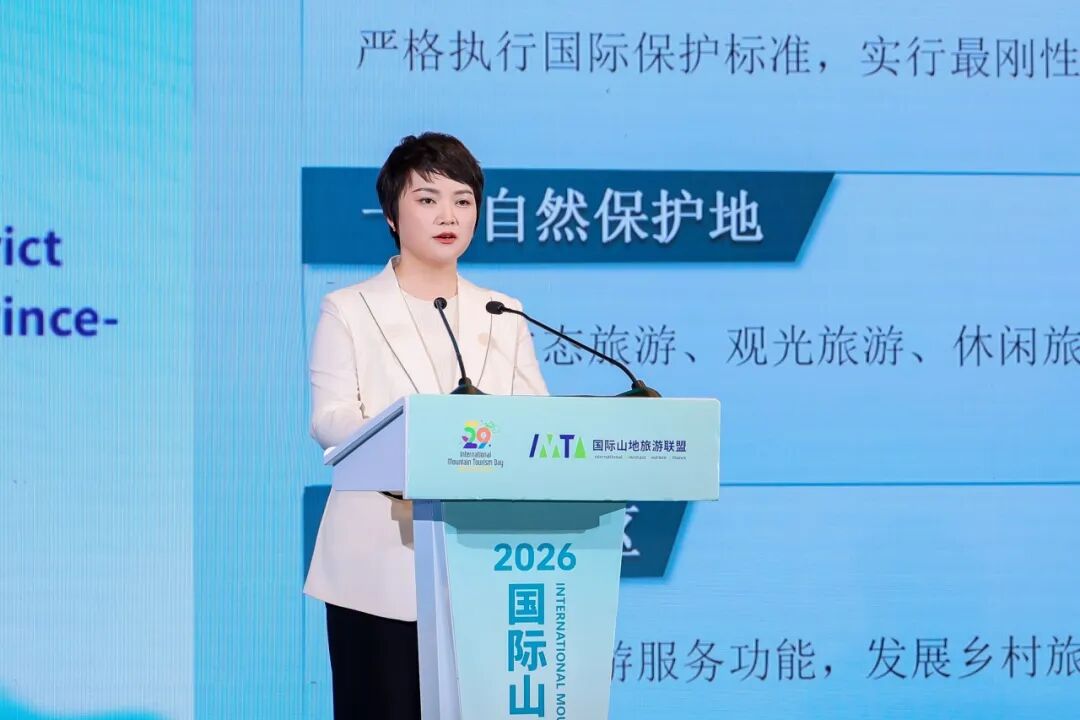
The following is the full text of the speech:
Good afternoon! It is a great honor to gather in Shennongjia for the Dialogue among World Famous Mountains, and to explore mountain conservation pathways and the future of ecotourism with all of you. I am Lu Lin from Shennongjia Forestry District Culture and Tourism Bureau, Hubei Province. First of all, I would like to thank the International Mountain Tourism Alliance (IMTA) for giving Shennongjia—this magical and mysterious land—the opportunity to exchange ideas with world-renowned mountain destinations and jointly explore the sustainable future of mountain tourism.
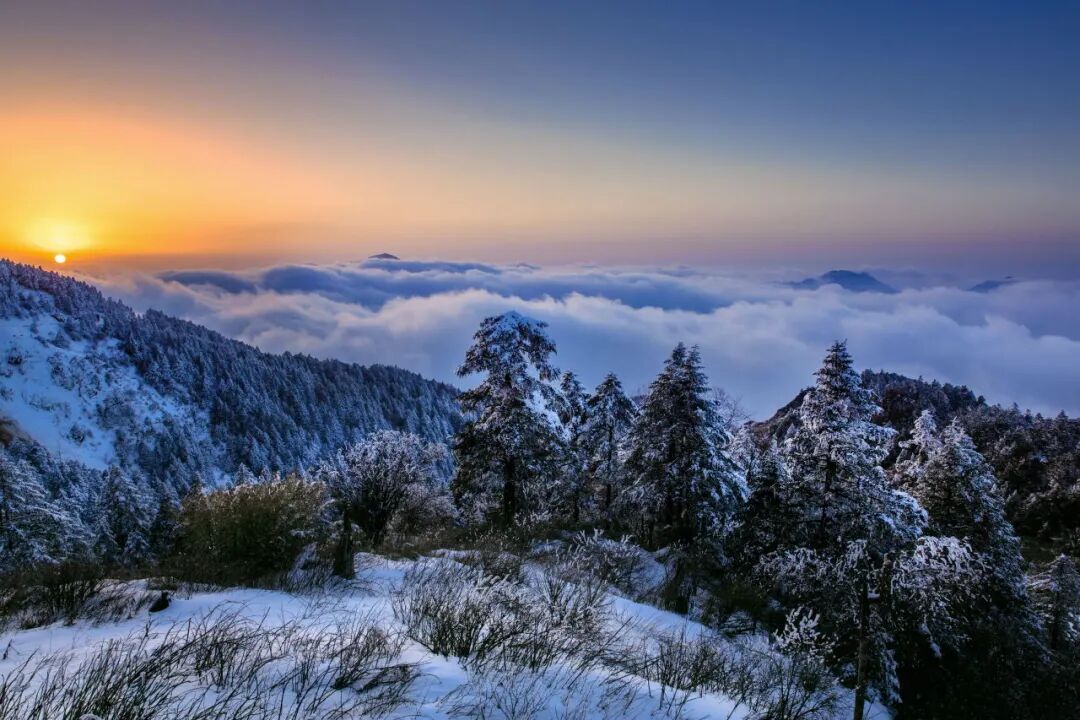
Shennongjia, a "green miracle" at 31°N latitude, is the best-preserved forest ecosystem at this latitude in the Northern Hemisphere and a shining ecological pearl in the heart of Eurasia. It is not only a UNESCO Man and Biosphere Reserve and a Global Geopark, but also the "Most Beautiful Wetland in China" as voted by netizens worldwide. It is named after the legend of "Shennong tasting herbs" and shrouded in mystery by the "Wild Man" enigma.
Today, I would like to focus on three key words—"top-tier protection, green development, sharing and win-win"—to share Shennongjia's practice and reflection.
I. Upholding Top-Tier Protection to Build an Ecological Shield for Sustainable Development
Protecting the biodiversity "gene pool" is the primary responsibility of a World Heritage site. Over the years, we have adhered to a trinity approach of institutional regulation, technological empowerment, and systematic restoration, safeguarding our ecological foundation with the highest standards.
In terms of institutional innovation, we have implemented a "three-category, five-tier" region-wide zoning control system across the entire district, dividing the territory into three major zones—world-class protected natural areas, general protected natural areas, and ecological management zones—with supporting positive and negative lists for tiered management. For the core areas of world-class heritage, we strictly enforce international protection standards with the most rigid and stringent closure measures. In ecological management zones, we scientifically allocate tourism service functions and layout low-carbon green industries, precisely defining the boundaries between protection and development. This has thoroughly resolved the issues of overlapping protected areas and fragmented management, achieving standardized and regulated governance across the region.
In terms of technological empowerment, we have established high-level scientific research and protection platforms, building five provincial and ministerial-level research platforms including the National Park Research Institute and the Provincial Key Laboratory for Golden Monkey Conservation Biology. We have developed an integrated protection system combining specimen databases, rare plant conservation, and wildlife rescue. By integrating cutting-edge technologies such as satellite remote sensing, electronic fencing, drone patrols, and under-forest smart monitoring, we have upgraded the "space-sky-ground-people-object" five-in-one smart protection and management network, enabling comprehensive, round-the-clock dynamic monitoring of biodiversity changes, ecological environment quality, human activity disturbances, and forest fire risks.
In terms of ecological restoration, we adhere to the principle of "natural restoration first, artificial restoration as supplement," continuously implementing region-wide ecological quality improvement projects, including targeted ecological management of Dajiuhu alpine wetlands and restoration of damaged mountain areas. We have built 25 dedicated wildlife migration corridors, effectively opening up ecological corridors for species exchange and gene flow. This has enabled us to achieve 45 consecutive years without major forest fires, with air quality consistently ranking first in the province, and the integrity and stability of the ecosystem continuously improving.
This ultimate protection has brought about the coexistence of all species. At present, the population of Shennongjia's flagship species—the golden monkey—has increased from 1,282 in 2005 to over 1,600. Over the past decade, a total of 13 new species, 19 new Chinese record species, and 379 new Shennongjia record species have been discovered. These extremely abundant and continuously renewing biodiversity resources have become Shennongjia's most scarce, core, and irreplaceable competitive advantage in mountain tourism.
Source: Shennongjia Forestry District Cultural and Tourism Bureau
II. Adhering to Green Development to Build High-Quality Ecotourism Brands
In recent years, we have continuously promoted the upgrading and iteration of the cultural tourism industry, using business model innovation, brand building, cultural empowerment, and scenario renewal as drivers to achieve deep integration of ecological, cultural, and economic values, carving out a path of high-quality cultural tourism symbiosis.
In terms of spatial layout, we have achieved differentiated development and complementary growth. In the southwest, relying on world-class resources such as Shennong Peak and Dajiuhu Lake, we focus on pristine sightseeing, wetland leisure, and science education and study tours. In the central area, leveraging alpine forests and snow and ice resources, we emphasize mountain outdoor activities, forest trekking, and winter sports experiences. In the northeast, focusing on rural landscapes, we develop mountain living, rural leisure, and countryside vacations. This approach fundamentally prevents homogenized development and low-level redundant construction, achieving scientific allocation and efficient utilization of resources across the region.
In terms of product supply, we continuously promote four-season business model upgrades, launching a "Culture and Tourism +" special initiative to deepen the integration of "culture and tourism + agriculture, study tours, wellness, technology, and sports events." We have developed "Shennong Shangli" cultural and creative products, with a focus on cultivating new cultural tourism consumer products, business models, and scenarios such as forest wellness, alpine summer retreats, science education and study tours, and outdoor sports. We are striving to establish a national-level study tour destination and ecological civilization education base. Keeping a close eye on key service consumption areas such as health and wellness, new cultural tourism, entertainment, and smart technologies, we continue to upgrade smart cultural tourism and immersive experience scenarios, driving the cultural tourism industry from single-purpose sightseeing to in-depth experiences, leisure living, and year-round consumption. Our cultural tourism carrying capacity and service quality have seen comprehensive improvement, directly driving more than 7,000 tourism-related jobs and indirectly employing over 20,000 people.
In terms of brand building, we leverage events and festivals to enhance our brand and expand our reach. We continue to polish signature Shennongjia brand events such as the Shennongjia Ice and Snow Season, Alpine Music Season, Wulang Qingyang Mountain Trail Race, and UTSS Forest Trail Run, using festivals to attract visitors and competitions to build the brand, continuously enhancing the visibility and influence of this ecotourism destination. We are enriching our four-season tourism products—"spring flower viewing, summer cooling, autumn foliage viewing, and winter snow play"—striving to build a new cultural tourism landscape where scenic beauty is everywhere and travel is possible year-round.
III. Adhering to Sharing and Win-Win to Ensure Ecological Value Truly Benefits the People
The core of sustainable mountain tourism development lies in the coexistence of humans and nature, and a win-win for protection and livelihood. We have always adhered to the principle of making the people participants in ecological protection, beneficiaries of cultural tourism development, and ambassadors of ecological civilization, truly achieving "protection with value, development with warmth, and increased income for the people."
First, ecological protection benefiting the people, ensuring that stewardship brings rewards. We have made full use of ecological public welfare positions, employing over 4,000 people as ecological rangers, science interpreters, and forest cleaners, transforming local residents from former "loggers" into "forest guardians" and "tree watchers." We have fully implemented ecological compensation and natural forest management subsidy policies, and innovatively established commercial insurance mechanisms for wildlife damage and natural disasters, effectively mitigating risks to people's production and daily lives. This has made ecological protection a stable source of livelihood income, greatly stimulating the intrinsic motivation of the people to actively protect and preserve the green environment.
Second,industry development enriching the people, turning scenery into wealth. We have deeply implemented the "Shennong Five Grains" industrial foundation initiative, vigorously developing green industries such as authentic Chinese medicinal herbs, ecological animal husbandry, and alpine farming. We have cultivated characteristic agricultural and cultural tourism brands such as "Shennong Baihua Honey," "Shennong Cloud Tea," and "Shennongjia Sauce Liquor," promoting the transformation of ecological agricultural products into tourism commodities, connecting "mountain treasures" with the "cultural tourism market." At the same time, leveraging homestays, scenic areas, and markets, we have opened up the production and sales chain for agricultural products, continuously converting ecological resources and rural landscapes into tangible income for the people.
Third,tourism benefiting the people, making symbiosis tangible. We always maximize the dividends of cultural tourism development for the people, building a comprehensive, actionable, and tangible system for enriching people through tourism. In terms of employment generation, we prioritize local employment, regularly conducting skills training in homestay operations, hospitality services, study tour interpretation, and e-commerce live streaming, enabling villagers to "find jobs at their doorstep and increase income amidst the mountains and waters." In terms of business model sharing, we have orderly opened up rural commercial spaces, encouraging people to leverage their own resources to develop small businesses such as boutique homestays, farm-to-table restaurants, mountain experiences, and cultural and creative sales, allowing people to directly participate in tourism operations and share tourism dividends. In terms of supporting infrastructure, we continuously increase investment in infrastructure, comprehensively improving the living environment, transportation facilities, and public services along tourism routes, not only upgrading scenic area quality but also effectively improving villagers' production and living conditions. Through sound benefit-sharing and co-construction mechanisms, we have deeply embedded the people in the entire chain of ecological protection and cultural tourism development, achieving deep integration of ecological protection, cultural tourism development, and rural revitalization.
Shennongjia's practice tells us that true sustainable development is not about putting the brakes on development, but about setting a navigation system for the future. In the face of global climate change and the sharp decline of biodiversity, the responsibility of mountain tourism is particularly significant.
Looking ahead, Shennongjia is willing to join hands with world-famous mountains to:
First, jointly establish "Sustainable Development Standards for Famous Mountains,"promoting the development of quantifiable indicator systems such as ecological carrying capacity assessment and carbon sink tourism.
Second, jointly share "Experiences in Ecological Value Transformation,"exploring the application of carbon trading and green finance in mountain tourism.
Third, jointly cultivate a "Cross-Regional Cooperation Network,"so that world heritage mountains are no longer isolated ecological islands, but green alliances for exchange and mutual learning.
Finally, I would like to quote an old forest ranger from Shennongjia: "Mountains are living beings. If you treat them well, they will give back to you." I sincerely welcome all leaders, experts, and colleagues to visit Shennongjia, to breathe in the scent of the primeval forest, to witness the agility of golden monkeys leaping through the treetops, and to deeply experience the unique charm of the "Roof of Central China." I believe that Shennongjia will present to you not just a tourism destination, but a "Chinese answer" to the question of how humans and nature can coexist in harmony. Let us join hands and work together to protect humanity's precious natural and cultural heritage, and create a bright future for the sustainable development of mountain tourism! Thank you all!
Editor Ⅰ: Zhang Congxiao
Editor Ⅱ: Zhang Wenwen
Editor Ⅲ: Liu Guosong