


On May 29, the 2026 International Mountain Tourism Day Theme Events opened in Shennongjia Forestry District, Hubei Province. Themed "Preserving World Heritage, Sharing the Prosperity of Famous Mountains — Zhiyin Hubei, Mysterious Shennongjia," the event brought together international organizations, foreign embassies and consulates in China, industry experts, and media representatives from around the world to explore pathways for the coordinated development of ecological protection and cultural tourism. The program featured the Opening Ceremony, the 2026 Dialogue among World Famous Mountains, the Investment and Business Meeting for Mountain Culture and Tourism, and a series of other events. Guests participated in various formats, sharing cutting-edge ideas and deepening practical cooperation. Anu Kumari Lama, Sustainable Mountain Tourism Specialist, International Centre for Integrated Mountain Development (ICIMOD), shared her views at the “Dialogue among World Famous Mountains 2026” Roundtable Dialogue session.
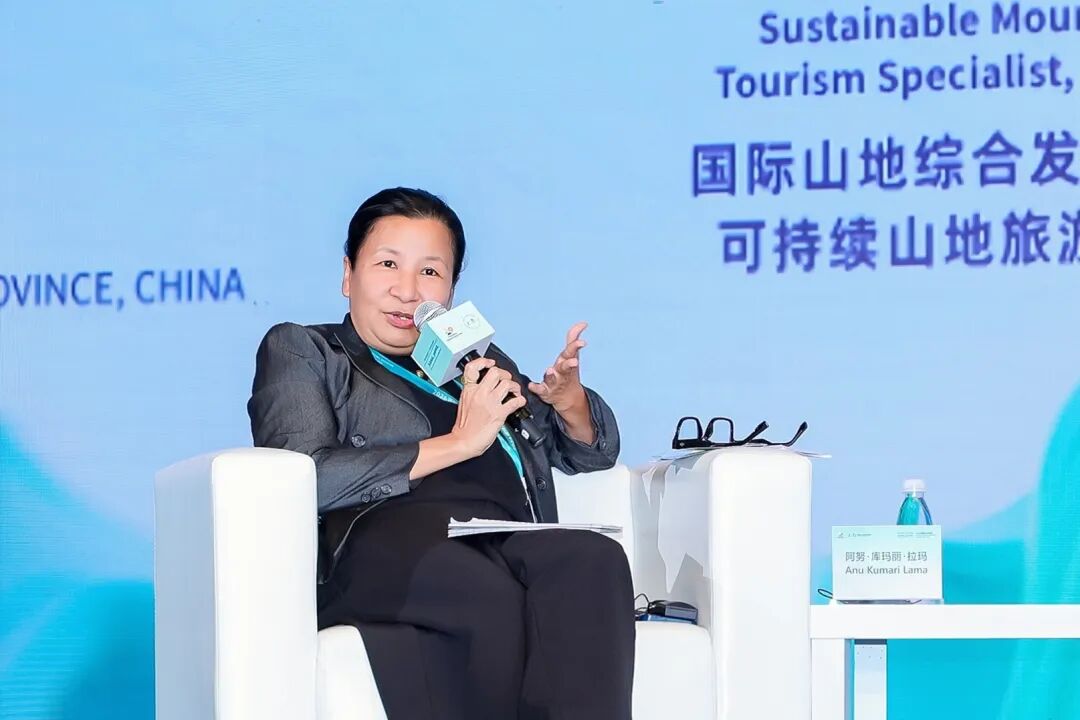
The following is the full text of the speech:
Across the Hindu Kush Himalaya (HKH), regenerative tourism is being advanced through an integrated framework built on three interlinked pillars: science, policy, and practice. This approach recognizes that tourism in mountain regions must go beyond sustainability to actively restore ecosystems, strengthen communities, and respond to climate risks.
Science:
At the scientific level, evidence highlights the urgency of action. Findings from the Tourism and Climate Change Stocktake (2023) underscore that the HKH is among the world's most climate-vulnerable mountain regions. Even under a 1.5°C global warming scenario, temperatures in the HKH are projected to rise to levels that critically threaten ecosystems and local livelihoods. Climate-induced hazards, such as glacier melt, floods, landslides, and avalanches, are already undermining tourism assets and community resilience. Importantly, this crisis is also one of climate justice: despite contributing minimally to global emissions, the HKH region bears disproportionate impacts. However, major systemic gaps remain. Tourism is still inadequately integrated into national climate policies, climate literacy within tourism education systems is limited, and climate finance rarely reaches the tourism sector.
Policy and Education:
Across Bhutan, Nepal, and Pakistan, our work on policy and education is taking shape through concrete institutional actions. In Bhutan, ecotourism policy endorsed by the Department of Forest and Parks Services links conservation with community empowerment and financing mechanisms tied to protected areas. In Nepal, a whole-of-society approach to sustainable and climate-resilient tourism, supported by the Nepal Tourism Board, focuses on safeguarding glaciers, forests, and biodiversity. In Pakistan, the Khyber Pakhtunkhwa Culture and Tourism Authority has institutionalized regenerative tourism guidelines that promote regenerative practices, gender inclusion, biodiversity conservation, and climate-resilient mountain tourism policy.
These national efforts are reinforced by strategic frameworks such as Bhutan's Integrated Tourism Master Plan (2025–2034) and Nepal's National Strategy for Wellness Tourism (2026–2035), signaling increasing policy alignment toward regenerative mountain tourism. Our work on "Bridging the Knowledge–Action Gap" focuses on curriculum co-development, training materials, and capacity-building programs to embed regenerative tourism principles and practices into education systems. Through this initiative, academic and vocational training institutions from Bhutan and Pakistan are being equipped to build a future-ready workforce capable of implementing regenerative tourism principles and practices into business and service operations.
Practice: Market Assessment in Bhutan-India-Nepal
Market assessments across Nepal, India, and Bhutan reveal three key trends. First, tourism demand is shifting, with tourists increasingly preferring less crowded destinations, authentic cultural experiences, and nature-based travel. Second, supply is evolving, as businesses adopt greener and more climate-resilient practices. However, a crucial insight is that tourists respond most strongly to what they can tangibly see, trust, and experience. This highlights the need to translate research and policy into visible and demonstrable models on the ground.
Practice: Pilot Demonstrations in China, India and Nepal
In China's Baihualing village, located near the Gaoligongshan National Nature Reserve, bird-based ecotourism provides a compelling example. The area, rich in rare and endemic bird species, attracts around 80,000 visitors annually. Collaboration among communities, government, and NGOs has enabled a model where conservation and livelihoods coexist. Non-invasive infrastructure, citizen science, and strict visitor guidelines maintain ecological integrity while generating income, demonstrating how biodiversity can underpin sustainable local economies.
In India's Dzongu region of North Sikkim, women and youths from the Lepcha community lead a regenerative tourism model. Following the collapse of tourism during COVID-19, the homestays evolved into experience-based enterprises offering cultural immersion and traditional cuisine. Supported by digital tools and government programs, the initiative achieved strong growth, increased local sourcing, and enhanced livelihoods while reinforcing cultural preservation, ecological stewardship, and local value retention.
In Nepal, two cases demonstrate complementary approaches. The first focuses on decarbonizing tourism enterprises. Through initiatives like the Tourovation (Tourism Innovation) Hub, small and medium enterprises are adopting solar energy, water-efficient systems, circular waste practices, and local sourcing. Supported by mentorship, blended finance mechanisms and technical assistance, these businesses are reducing costs, improving resilience, and enhancing competitiveness. The second Nepal case highlights destination-level transformation in Dhankuta district. This collaborative initiative, bringing together local government, the private sector, the indigenous Aathpahariya community, with funding support from the Australian Government, addresses two fundamental challenges: water scarcity and youth outmigration. The pilot project is designed to ensure that community-led water harvesting improves accessibility, reduces women's labor burdens, and restores springs and recharge systems. Tourism is integrated with water-smart solutions, ecosystem restoration, community homestays, eco-trails, and indigenous cuisine, offering immersive experiences of a living regenerative system. Women-led governance strengthens their leadership and environmental stewardship. This model has gained significant global recognition, featured in Time, Lonely Planet, the Guardian and National Geographic Traveller.
Applying this Learning in Shennongjia:
The evidence from the HKH demonstrates that the foundations for regenerative mountain tourism are already in place. The question now is to scale these models and make their impacts more visible. This is where locations like Shennongjia, with its exceptional biodiversity and UNESCO Global Geopark status, present significant opportunities. By making biodiversity experiential, strengthening local value chains, and investing in green, low-carbon research, policy and actions on the ground, Shennongjia can become a global exemplar.
Unless otherwise credited, all text and images are sourced from: International Mountain Tourism Alliance (IMTA)
Editor Ⅰ: Zhang Congxiao
Editor Ⅱ: Zhang Wenwen
Editor Ⅲ: Liu Guosong