


On May 29, the 2026 International Mountain Tourism Day Theme Events opened in Shennongjia Forestry District, Hubei Province. Themed "Preserving World Heritage, Sharing the Prosperity of Famous Mountains — Zhiyin Hubei, Mysterious Shennongjia," the event brought together international organizations, foreign embassies and consulates in China, industry experts, and media representatives from around the world to explore pathways for the coordinated development of ecological protection and cultural tourism. The program featured the Opening Ceremony, the 2026 Dialogue among World Famous Mountains, the Investment and Business Meeting for Mountain Culture and Tourism, and a series of other events. Guests participated in various formats, sharing cutting-edge ideas and deepening practical cooperation. Federico Mattei, Sustainable Food Systems Expert, Mountain Partnership Secretariat (MPS) hosted by the Food and Agriculture Organization of the United Nations (FAO), shared his views at the “Dialogue among World Famous Mountains 2026” Roundtable Dialogue session.
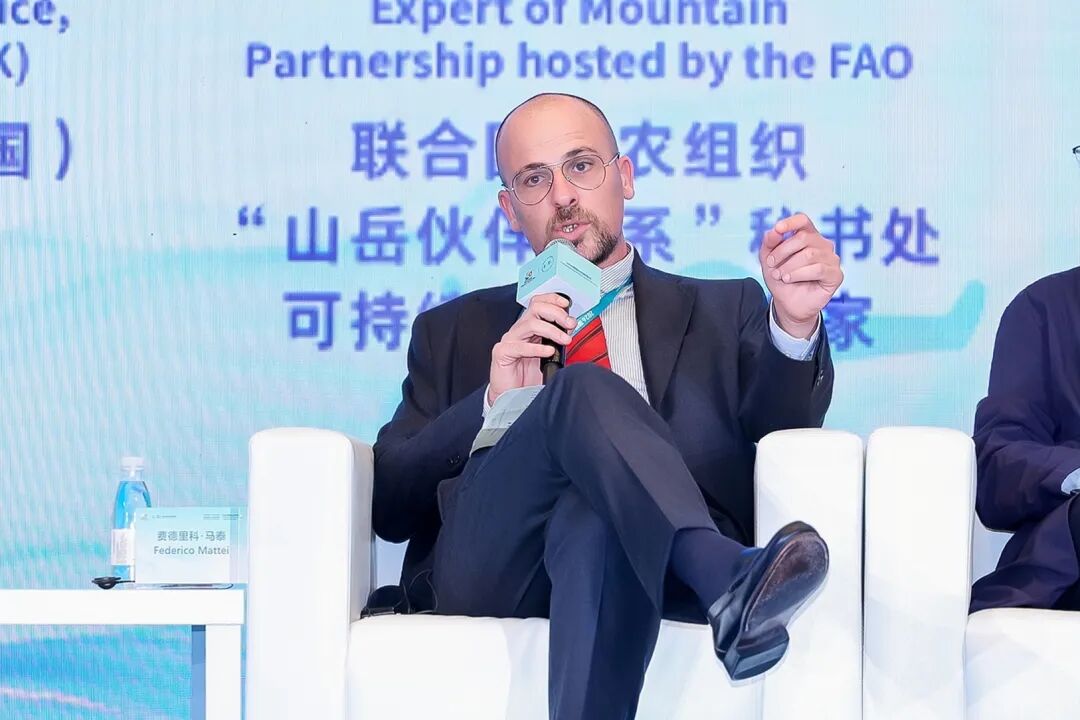
The following is the full text of the speech:
Mountains are fragile ecosystems, biodiversity hotspots, and vital regions for human survival and development. They exert profound influence on areas beyond their boundaries. Although the relationships among ecosystems, tourism, and sustainable food systems are not immediately obvious, they can generate synergies and improve their interconnections.
Tourism can provide income sources for ecosystems, support local economic development, and offer financial support for ecological conservation and biodiversity. Furthermore, tourism raises public awareness, allowing visitors to directly recognize the importance of mountains — an awareness that will stay with them throughout their lives and influence their future consumption behaviors. Without nature, there is no tourism; without visitors, there is no income, and thus no means to support environmental protection. This is a win-win cycle.
Mountain ecosystems encompass diverse communities — farmers, artisans, and others — who collectively participate in and maintain biodiversity. Tourism managers bear the responsibility of protecting biodiversity and ecosystems. Attention should be paid to sustainable food systems, viewing them as rivers that nourish ecosystems. Sustainable food systems should balance economic, cultural, and environmental benefits.
Achieving these goals requires explaining sustainability concepts to visitors. Different types of visitors have varying levels of understanding of sustainable products, but they are all willing to participate in ecological conservation through their own actions. The International Mountain Tourism Alliance (IMTA) and the Mountain Partnership Secretariat (MPS) have the responsibility to provide resources, technologies, and best practices, and to help all parties establish connections, share experiences, and learn from one another.
Editor Ⅰ: Zhang Congxiao
Editor Ⅱ: Zhang Wenwen
Editor Ⅲ: Liu Guosong