


On May 29, the 2026 International Mountain Tourism Day Theme Events opened in Shennongjia Forestry District, Hubei Province. Themed "Preserving World Heritage, Sharing the Prosperity of Famous Mountains — Zhiyin Hubei, Mysterious Shennongjia," the event brought together international organizations, foreign embassies and consulates in China, industry experts, and media representatives from around the world to explore pathways for the coordinated development of ecological protection and cultural tourism. The program featured the Opening Ceremony, the 2026 Dialogue among World Famous Mountains, the Investment and Business Meeting for Mountain Culture and Tourism, and a series of other events. Guests participated in various formats, sharing cutting-edge ideas and deepening practical cooperation. Đào Duy Tùng, CEO of Tung Lam Development Joint Stock Company, Vietnam delivered a speech at the “Dialogue among World Famous Mountains 2026” Exchange and Sharing Session.
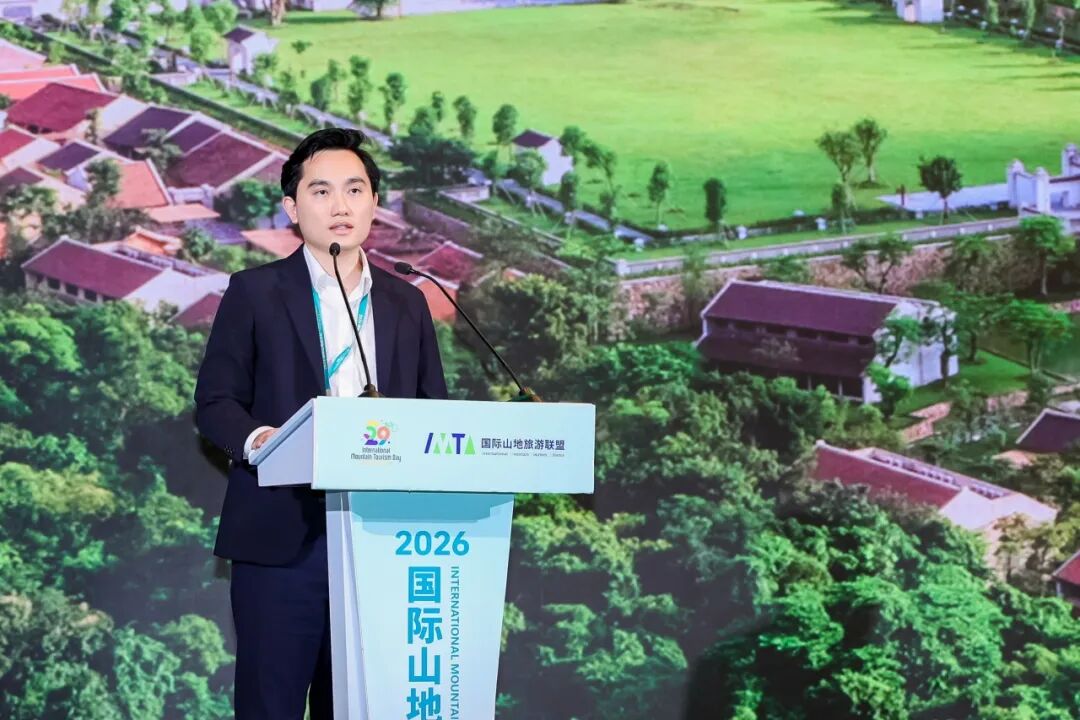
The following is the full text of the speech:
First of all, thank you very much for giving us the opportunity to share the story of Yên Tử today.
My name is Tung Dao, representing Tung Lam Development JSC — the organization operating the tourism and hospitality services at Yên Tử Mountain and Ha Long Bay in Vietnam. Our assets include the cable car lines; Truc Lam complex, that comprises 2 resorts in the mountain foot, restaurants chain, workshops and commercial shops. In Ha Long Bay, we have a Novotel hotel.
Today, I would like to share briefly about Yen Tu Mountain and our practices to preserve the mountain nature, its cultural value and our vision for the destination development in the future.
Yên Tử is located in Northeast of Vietnam, it is 120km away from Hanoi – The capital city and 50km from Ha Long Bay. The mountain combines several important dimensions together: Cultural and Historical Heritage, which are presented through ancient temples and relics; Natural landscapes and protected forests; Traditional architecture inspired by the Trần Dynasty; and Wellness and meditation experiences.
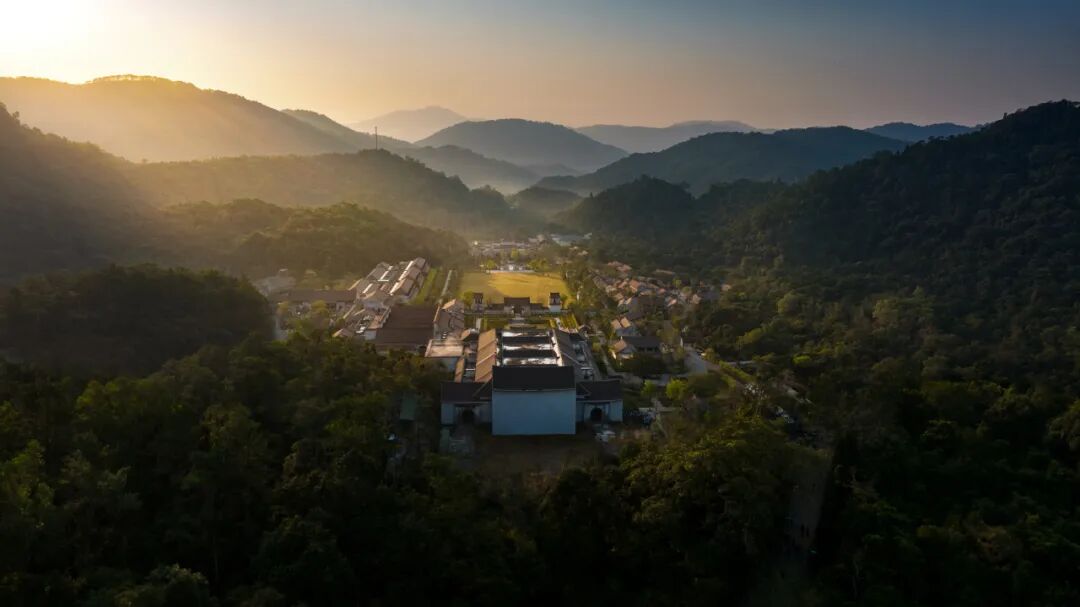
Here are some of the actual photos of the mountain landscape. This is the destination map, it comprises 2 parts: the mountain with the cable car line, walking path, ancient temples, stupas, ancient forest trees. The second part is in the mountain foot with a complex of resorts, restaurants, commercial shops.
Since our development in Yen Tu from 2000, over the past 25 years, the number of visitors has grown significantly — from around 137,000 visitors in 2000 to more than 1 million visitors annually today. This growth creates opportunities, but it also creates responsibility. And this leads to the central question we constantly ask ourselves: "How do we develop tourism while protecting the soul of the mountain?"
At Yên Tử, ESG is not simply a corporate framework or a marketing concept. For us, having a 700 years old legacy, sustainability is necessary to protect and preserve the mountain values. Therefore, every development decision is evaluated against four core principles: Protect the heritage forest; Build with respect for the landscape; Strengthen local communities; and Preserve and transmit culture. These principles guide every project we implement on the mountain.
Besides the ancient temples, the heritage forest is one of the most valuable assets at Yên Tử. The Yên Tử National Forest contains 144 recognized Vietnamese Heritage Trees, including ancient pine trees and ancient yellow apricot trees, many of which are over 700 years old. There is an ancient pine road traditionally believed to have been planted by King Trần Nhân Tông and his disciples centuries ago. These trees are not only landscaping elements. They are living historical witnesses. That is why every construction or infrastructure project on the mountain must be reviewed carefully to ensure no damage to these heritage assets.
At Yên Tử, we try to adapt architecture to nature. All developments follow the natural topography of area. Many structures are built around existing trees and natural rock formations instead of removing them. Materials and colors are selected carefully so the buildings blend quietly into the landscape. Even the mountain paths are designed intentionally to encourage visitors to walk slowly, explore the temples along the journey, and reconnect with nature and spirituality. Here are some photo that demonstrate our method to allocate the buildings.
Managing waste on a mountain destination welcoming over one million visitors annually is a major challenge. Waste is collected daily, using winch cable line to transport down the mountain, and delivered to treatment facilities. We place waste bins and environmental awareness signage throughout visitor routes to encourage responsible visitor behavior. Even the waste bins are carefully designed as tree trunks to fit in the landscape. In addition, we regularly organize community clean-up campaigns together with employees, labor unions, and local authorities. For wastewater, all wastewater is treated before being released back into the natural streams.
Source: Tung Lam Development Joint Stock Company, Vietnam
In our resorts, all the room amenities are made from organic materials. Water bottles are reused in the properties. For the plastic waste bag, it must have compostable certification.
Next, I would like to share 2 interesting sustainable projects that we have implemented recently. The first is Organic Farm. Currently, we operate more than 3 hectares of organic farmland using entirely natural cultivation methods: No pesticides; No chemical fertilizers; and Free-range chickens for egg production. The farm produces around 30 tons of vegetables annually and supplies more than 30 percent of restaurant consumption within the destination.
The other project is a reusable glass bottled water initiative. Using natural spring water from the mountain, we established a filtration and reusable bottling system. After use, bottles are collected, cleaned, sterilized, and refilled. With this facility, all of our resorts and restaurants do not use plastic bottles. What started as an internal sustainability solution has now expanded regionally. Today, the system supports 42 hospitality properties, including partners from Marriott International, Accor, Hilton, and The Ascott Limited. Together, more than 5 million glass bottles are reused annually. This helps eliminate millions of single-use plastic bottles every year.
At Yên Tử, we believe sustainability is not only environmental. It is also local community development. More than 70 percent of our employees come from surrounding villages within a 20-kilometer radius. We focus on: Local employment; Hospitality training; Supporting local agriculture; and Promoting traditional crafts and cultural products. We also continue preserving traditional culture, medicine, festivals, and indigenous knowledge through real practice.
Over the next decade, our ambition is to become an example of sustainable mountainous tourism in Asia. Our commitments include: Zero loss of recognized heritage trees, expanding native species replanting; Increasing local sourcing; Preserving traditional knowledge and crafts; and Enhancing cultural depth without increasing significantly visitor pressure on sacred areas. We believe future tourism development should focus on both growth and balance. Not only on attracting visitors, but also on protecting what makes a destination meaningful in the first place.
To summarize our goal and vision, sustainability is not a trend, or marketing tactics. It is the way a 700-year-old legacy continues to thrive for future generations. We warmly welcome you to visit Yên Tử someday and experience this journey. Thank you.
Unless otherwise credited, all text and images are sourced from: International Mountain Tourism Alliance (IMTA)
Editor Ⅰ: Zhang Congxiao
Editor Ⅱ: Zhang Wenwen
Editor Ⅲ: Liu Guosong