


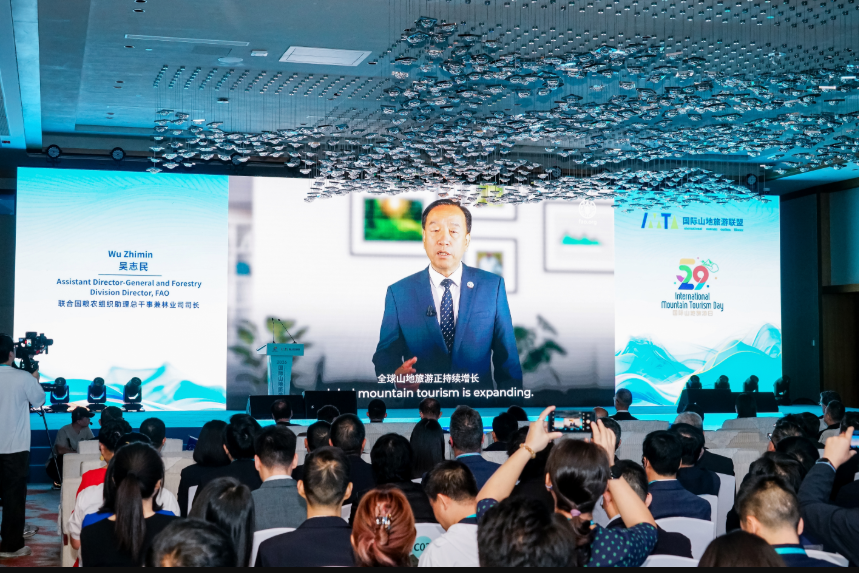
The International Mountain Tourism Day 2026 Theme Events opened on 29 May in Shennongjia, Hubei Province. With the theme "Preserving World Heritage, Sharing the Prosperity of Famous Mountains — Zhiyin Hubei, Mysterious Shennongjia", the gathering brought together representatives from international organizations, foreign embassies and consulates in China, cultural and tourism authorities,, and media professionals from around the world to explore pathways for the coordinated development of ecological protection and cultural tourism. The program featured the Opening Ceremony, the Dialogue among World Famous Mountains 2026, the Investment and Business Meeting for Mountain Culture and Tourism, and a series of other events. Guests participated in various formats, sharing cutting-edge ideas and deepening practical cooperation. Wu Zhimin, Assistant Director-General and Forestry Division Director of the Food and Agriculture Organization of the United Nations (FAO), delivered a video speech at the Opening Ceremony of the Events.
The following is the full text of the speech:
It is an honor to address you on International Mountain Tourism Day. Mountains inspire us. They are symbols of beauty, resilience, and heritage. They are also home to communities, cultures, and ecosystems that sustain millions of people worldwide. According to the FAO/UN tourism report released in 2023, global mountain tourism is expanding. Total international tourism in 2019 was estimated at 1.5 billion people, of whom nine to 16% — equivalent to 195 million to 375 million people — corresponded to mountain tourism.
This creates opportunity. Mountain tourism supports an estimated 10 million to 60 million direct jobs globally, offering vital livelihoods for remote communities, especially women and young people. But it also comes with risk.
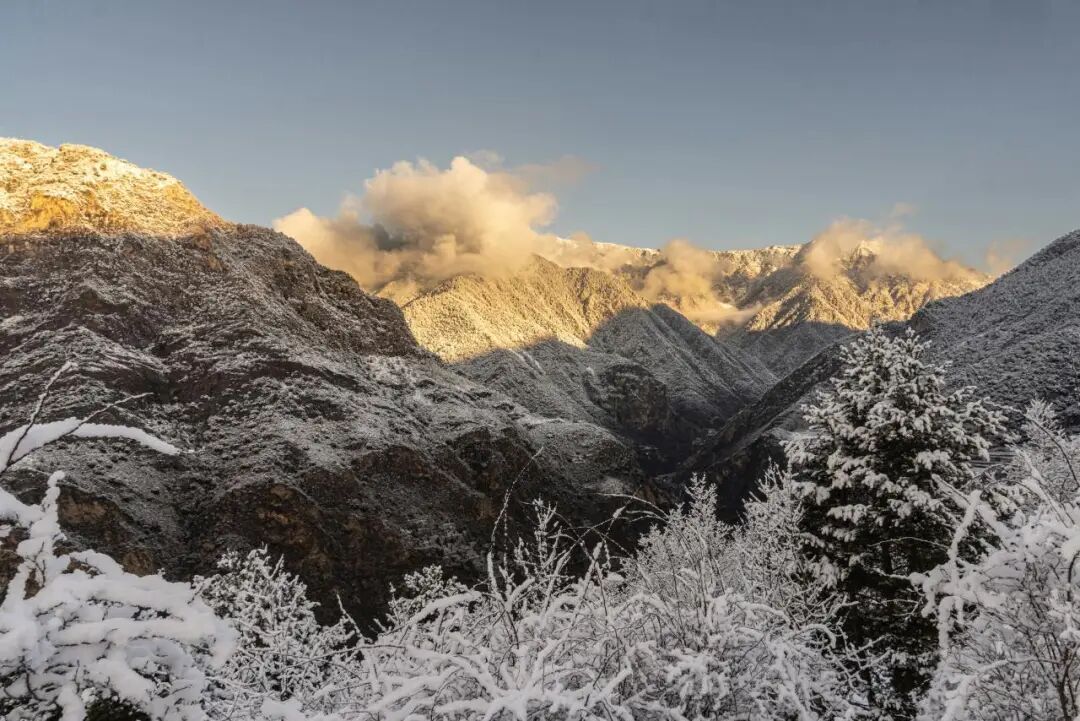
Andorra
Source: pexels@antonio-miralles-andorra
The services provided by mountain ecosystems can't be replaced. They regulate water, protect soils and conserve biodiversity. They also supply wild foods and wood fuel, on which up to 1 billion people depend for food security. When mountain forests are degraded, the consequences extend far beyond the mountains. It is crucial, therefore, to manage mountain ecosystems sustainably, and to ensure that tourism has minimal negative impacts.
We are seeing encouraging progress. In China, mountain tourism is increasingly guided by ecological principles and the use of tourist models that bring conservation with sustainable local livelihoods. As the UN lead agency for mountains and the host of the Mountain Partnership Secretariat, FAO is deeply committed to supporting mountain regions and work closely with member nations to advance sustainable mountain development worldwide.
The message is simple: tourism must not exceed what nature can sustain. This message was reaffirmed at the Seventh Global Meeting of the Mountain Partnership hosted by Andorra last March under the theme "Resilient Tourism Thriving Communities". The Andorra Declaration calls for scaling up sustainable climate resilient low impact tourism, including ecotourism and sustainable agritourism.
The responsibility lies with all of us. We must invest in solutions that respect ecological boundaries. We must empower mountain communities to lead their own development. And we must ensure that tourism becomes a force for protection. If we get this right, mountain tourism can help build resilient communities, protect vital ecosystems, and contribute to a more sustainable and inclusive future.
If we fail, we risk losing what makes mountains unique. Let's act - together and with urgency. Thank you.
Unless otherwise credited, all text and images are sourced from: International Mountain Tourism Alliance (IMTA)
Editor Ⅰ: Zhang Congxiao
Editor Ⅱ: Zhang Wenwen
Editor Ⅲ: Zhang Yijing