


The 2026 International Mountain Tourism Alliance (IMTA) Annual Conference was held on the morning of November 9 in Xingyi City, Qianxinan Bouyei and Miao Autonomous Prefecture, Guizhou Province. IMTA members from home and abroad, representatives of international organizations and foreign institutions in China, heads of tourism-related enterprises and mountain tourism destination management agencies, and experts and scholars gathered to exchange and share practical achievements in culture-tourism-sports integration, assess new trends, business forms and models in the global mountain living and wellness industries, and explore new pathways for high-quality development of mountain living.
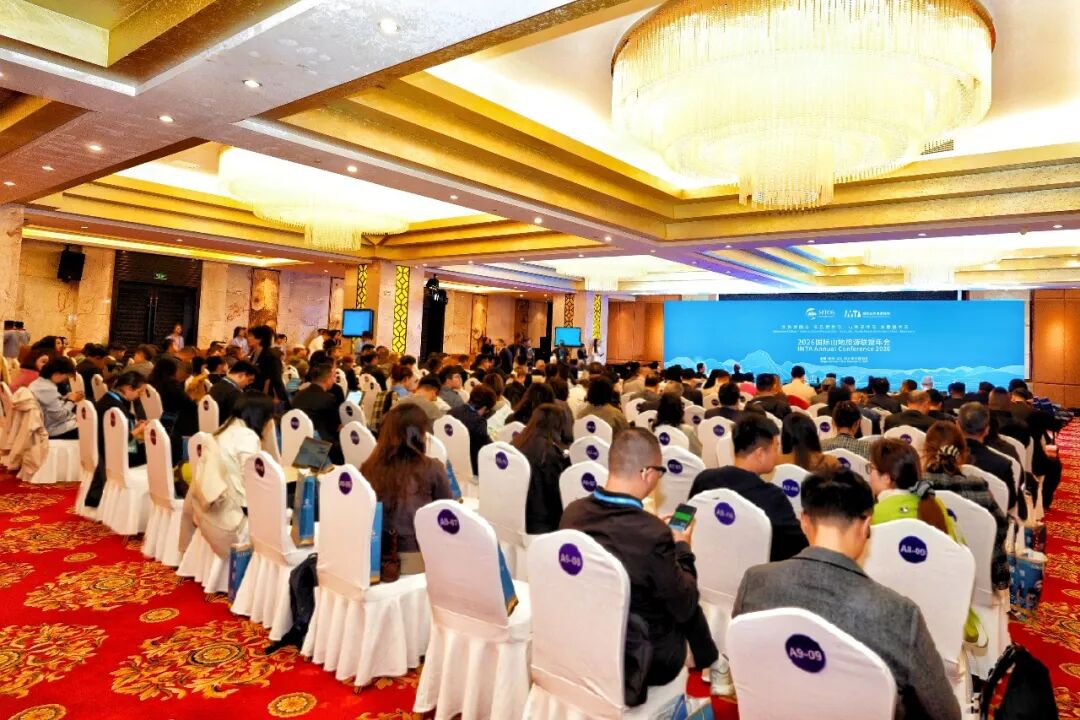
The 2026 IMTA Annual Conference
He Yafei, Vice Chairman and Secretary-General of IMTA; Lu Yongzheng, Member of the Standing Committee of the CPC Guizhou Provincial Committee, Head of the Publicity Department of the CPC Guizhou Provincial Committee; and Pansy Ho, Vice Chairman of IMTA, addressed the Conference. Song Yueping, Deputy Director of Tourism Quality Supervision and Management Office, Ministry of Culture and Tourism of China, and Xu Honggang, Dean of School of Tourism Management of Sun Yat-Sen University, delivered keynote speeches. Jiang Yiyi, Dean of School of Leisure Sports and Tourism, Beijing Sport University, released the research “Mountain Outdoor Sports Industry: Scenario Innovation, Regulator Governance and International Development,” jointly compiled by IMTA and Beijing Sport University. The Conference also reports on work in 2026 and plans for 2027 of IMTA, and presented certificates to new members.
Strengthening the Platform to Build a Diversified and Collaborative Development Landscape
He Yafei said that in the opening year of the 15th Five-Year Plan period, the culture and tourism industry has embraced new development opportunities. It is important to cultivate tourism through culture and promote culture through tourism, and vigorously develop new forms of tourism such as sports tourism and wellness tourism. China’s domestic tourism market continues to heat up, and mountain living is increasingly favored by tourists. Xingyi boasts sound ecology and rich ethnic cultural resources; it should transform its landscape advantages into high-quality living products, hold fast to the ecological bottom line, deepen culture-sports-tourism integration, and jointly build an ecosystem for mountain living development.
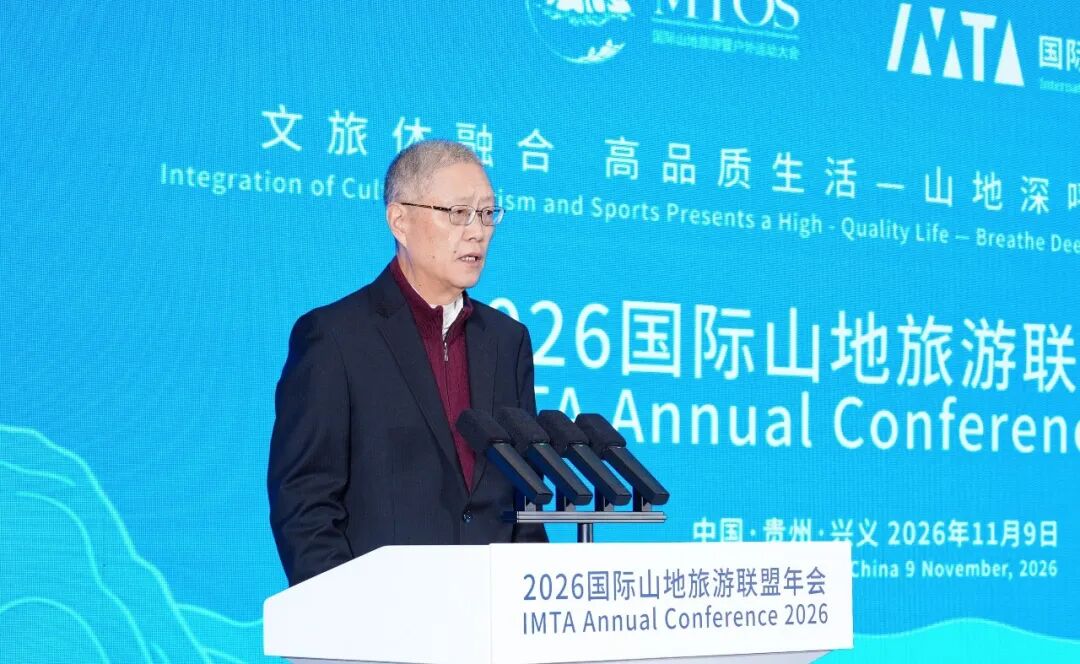
He Yafei, Vice Chairman and Secretary-General of IMTA
In his address, Lu Yongzheng said that decade ago, to promote international mountain tourism, Guizhou initiated the establishment of China’s first international tourism organization in the new era. Since its founding, IMTA has been rooted in Guizhou, reached across China and embraced the world. It has brought cutting-edge ideas, advanced experience, high-quality resources and cooperation opportunities to Guizhou, while conveying to the world Guizhou’s beauty of nature, culture, development and harmony, making positive contributions to the high-quality development of Guizhou’s culture and tourism industry. “We sincerely look forward to working through IMTA to deepen exchanges and cooperation with all of you—using mountains as a bridge and treating each other with sincerity—to continuously raise the ‘gold content,’ ‘innovation content’ and ‘green content’ of mountain tourism development and jointly promote its open development. We will work shoulder to shoulder with IMTA to encourage exchanges and mutual learning across the global mountain tourism sector, deepen Guizhou’s communication with all parties and cooperation in mountain tourism resource development, build mechanisms for resource connectivity and mutual visitor flows, achieve complementary advantages and mutual benefit, and jointly advance innovative mountain tourism development.”
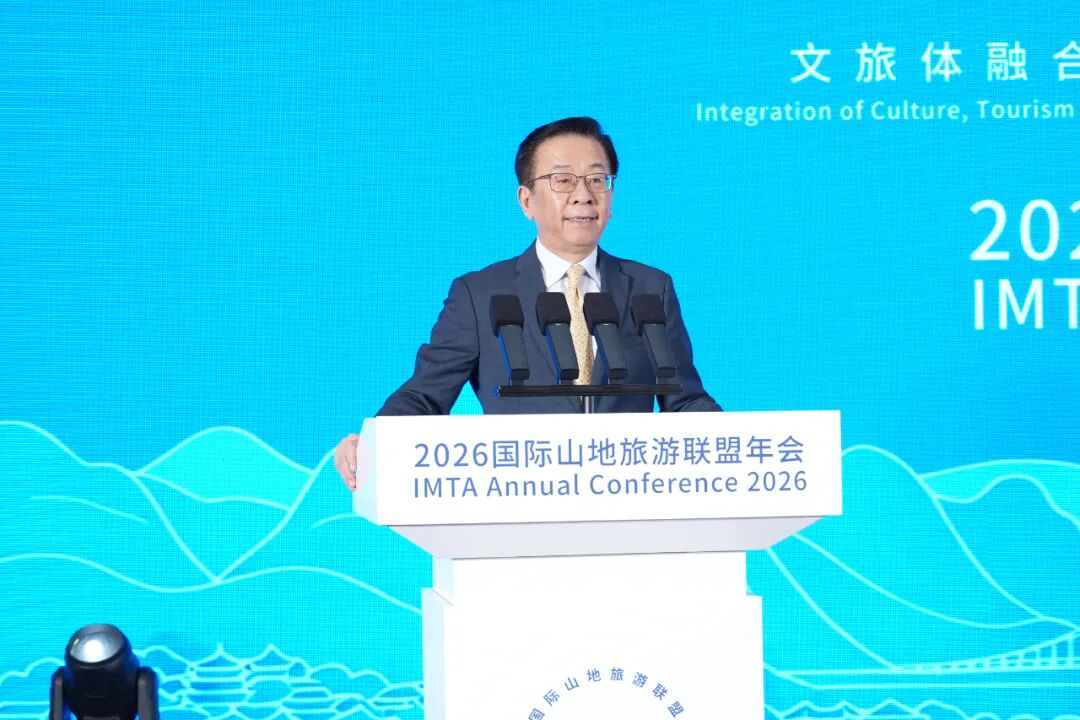
Lu Yongzheng, Member of the Standing Committee of the CPC Guizhou Provincial Committee, Head of the Publicity Department of the CPC Guizhou Provincial Committee
In a video address, Pansy Ho said that over the years IMTA has brought destinations, communities, enterprises and institutions together under a shared vision, giving mountain tourism a clear voice and earning it a place on the international stage. “Mountains are not only places for people to visit, but also places where people live, work and protect their homes.” In her view, for mountain communities, sustainability and resilience are not slogans but daily practice—protecting nature before damage occurs—and mountain destinations are well positioned to lead in both areas.
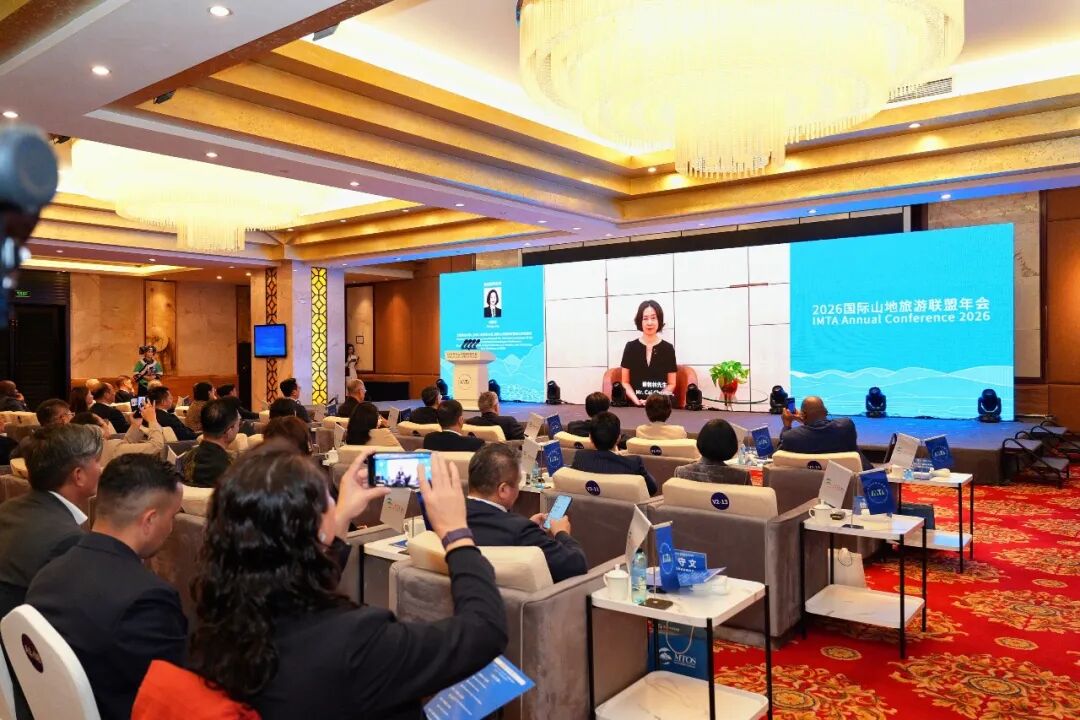
Pansy Ho, Vice Chairman of IMTA
Consolidating the Platform for Diversified and Collaborative Development
In the work report session, He Yafei reported on work in 2026 and plans for 2027 of IMTA. In 2026, IMTA advanced work systematically in three areas—platform functions, mechanism operation and cooperation channels—and was rated “Excellent” in the Ministry of Culture and Tourism’s 2025 annual performance review of social organizations. By leveraging the strengths of platforms such as International Mountain Tourism Day and the International Mountain Tourism and Outdoor Sports Conference, IMTA continued to burnish the international image of mountain tourism. It expanded cooperation with multiple international organizations and government departments of mountain tourism countries and deepened its participation in global governance. It intensified work on international and national standards and upgraded the certification systems for “World Tourism Famous Mountains” and “IMTA International Mountain Hiking Tourism Demonstration Routes.” It improved member services and enhanced cohesion, served Guizhou’s development and helped build high-quality living destinations, and continued to improve internal governance and standardized operations. In 2027, IMTA will further consolidate its platform foundation. Building on existing work, it will focus on “mountain tourism + sports,” “mountain tourism + industry” and “mountain tourism + culture,” give full play to IMTA members’ leading roles in different fields by holding various activities, create a new IP, “Mountain-Sea Four Seasons,” support Guizhou in building a livable and wellness-friendly tourism destination, and use artificial intelligence to innovate international communication and improve publicity quality.
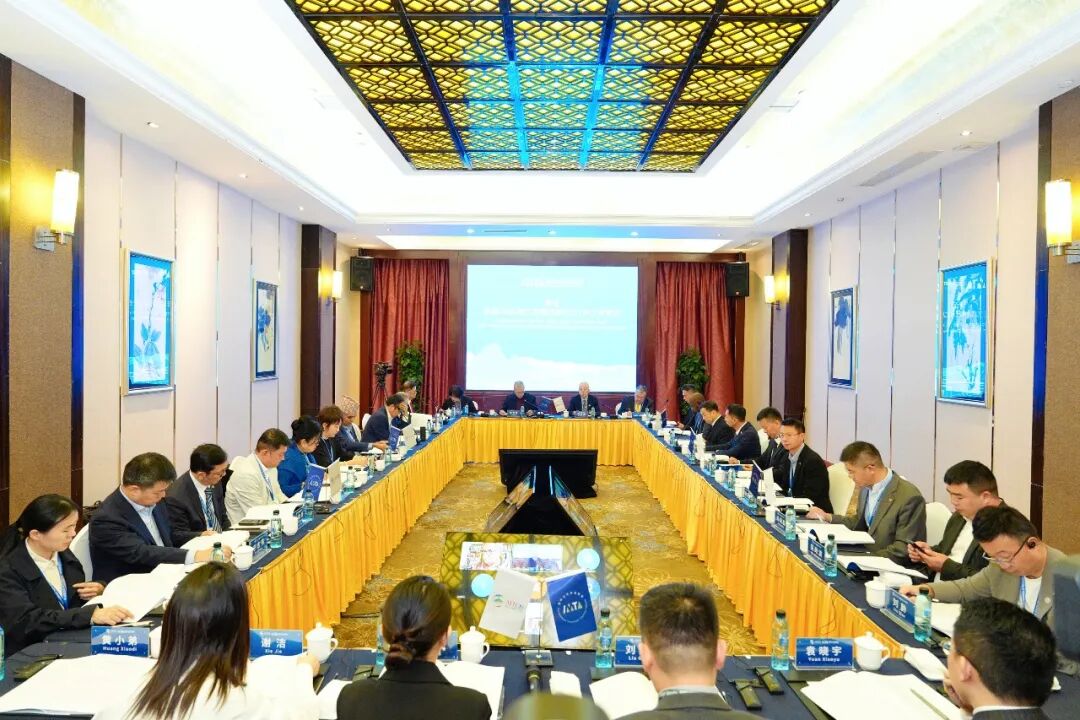
The 7th Plenary Meeting of the Second IMTA Council
At the Conference, He Yafei, Vice Chairman and Secretary-General of IMTA, and Liu Zhaohui, Vice Chairman of IMTA, presented certificates to new members for 2026. After review and approval by the IMTA Council, a total of 16 institutional members and one individual member joined IMTA this year. They include individual member Serge Koenig, President of Club Jorasses and a senior French expert in outdoor sports, and institutional members such as Al Shouf Cedar Society (Lebanon), Lao China Culture and Tourism Promotion Association, TUI Hotels & Resorts (Germany), Cambodia Tourism Association, Milne Bay Administration (Papua New Guinea), Phoenix New Media Ltd. (ifeng.com), Guizhou University, Mafengwo (Guizhou) Tourism Group Co., Ltd., Fujian Wuyishan Tourism Development Co., Ltd., BES Cultural and Tourism Group, Guiyang Kangyang University, Shanghai Shandian Intelligent Technology Co., Ltd., Apple (China) Co., Ltd., Anshun University, Shanghai Lianchuan Industrial (Group) Co., Ltd., and Shanghai Steering Wheel Sports Goods Co., Ltd. IMTA’s “international family” has further expanded, and industry connections have become closer.
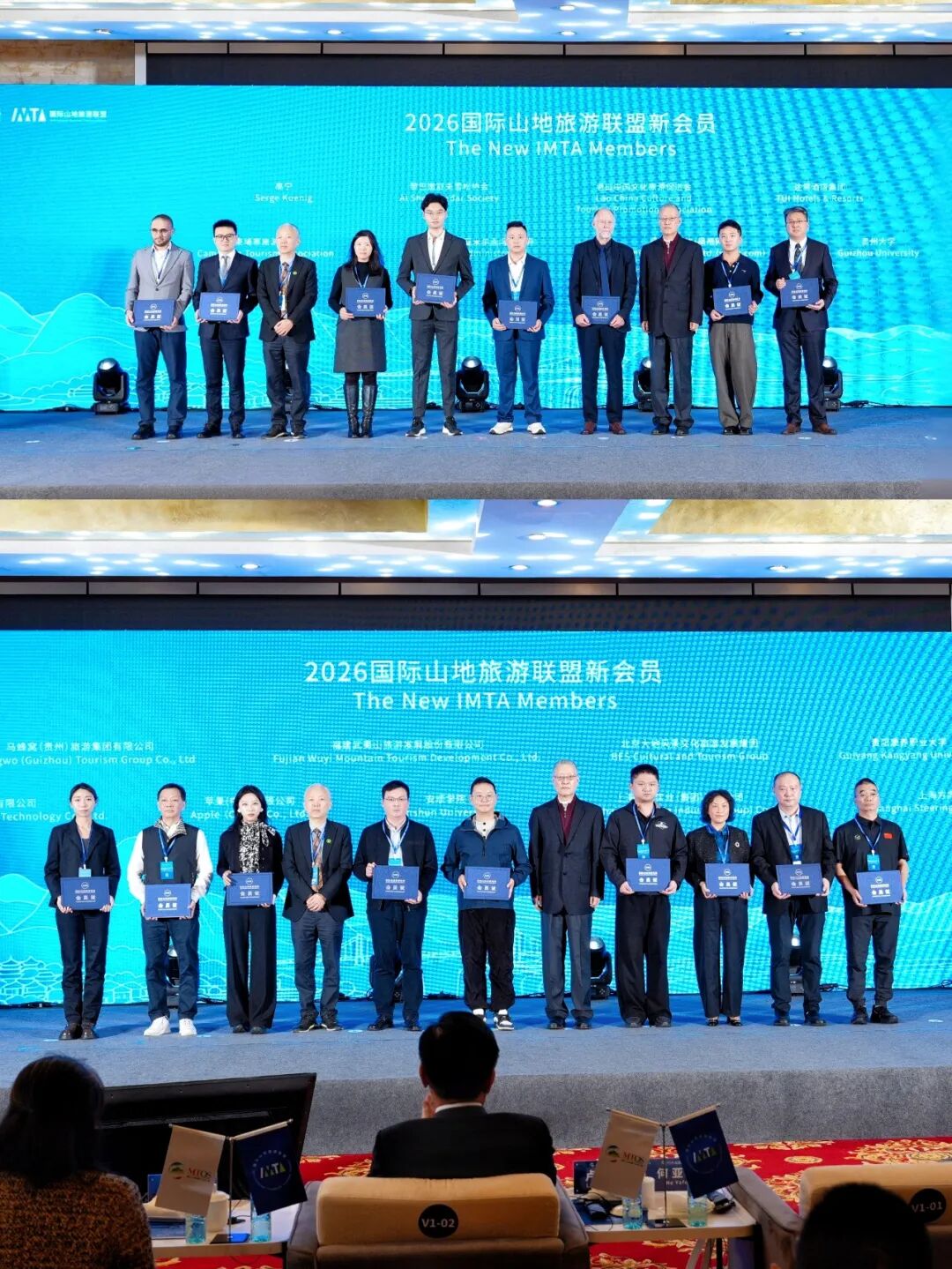
Certificates presented to new IMTA members
Pooling Wisdom and Innovating to Explore New Pathways for Integrated Mountain Tourism Development
Wang Shuo, Vice Chairman of the Global Tourism Economy Research Center, moderated the keynote speech and research release session. In this session, Song Yueping focused on the theme “Standards · Mountain Tourism.” She suggested that IMTA work with standards bodies and industry organizations to build a standards framework covering general foundations, products and services, and safety assurance; develop standards in key areas such as mountain hiking, camp construction and services, and signage; and promote the translation of mature results into international standards. She also called for creating regional signature mountain routes, cultivating industry benchmark destinations, adhering to ecological priority, safety and community sharing, and using standards to empower sustainable and high-quality global mountain tourism development.
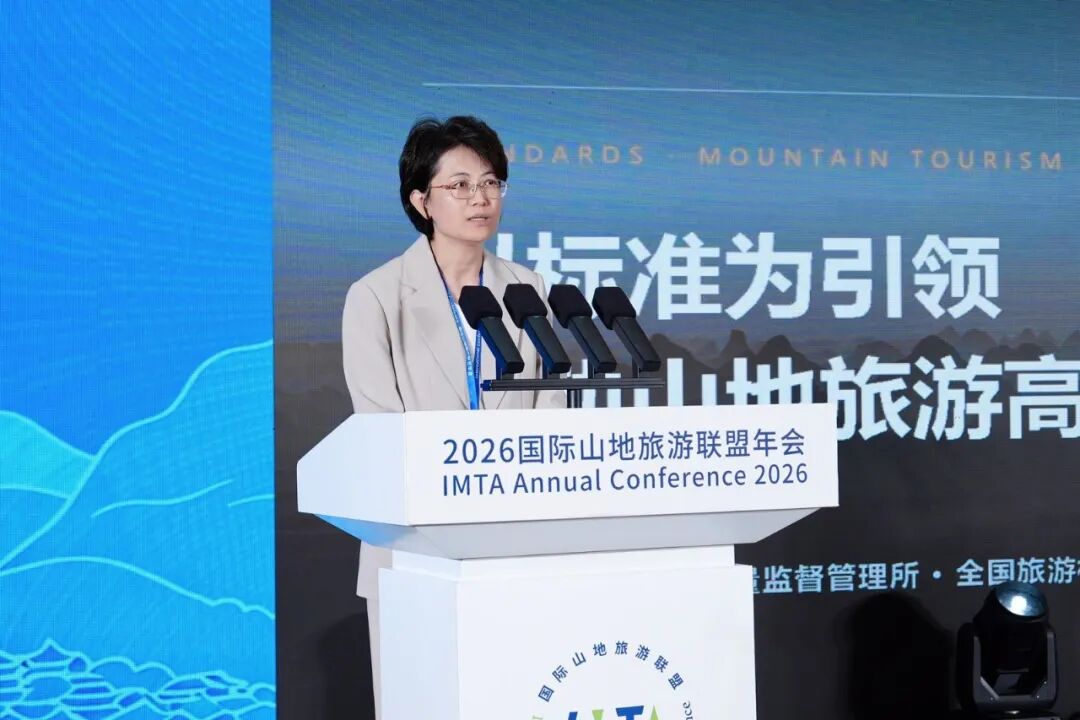
Song Yueping, Deputy Director of Tourism Quality Supervision and Management Office, Ministry of Culture and Tourism of China
Xu Honggang proposed that mountain wellness tourism should shift from “perceived wellness” to “evidence-based wellness.” Tourists’ subjective feelings and resource endowments do not equal actual wellness outcomes; public health needs are diverse and cannot be broadly categorized as sub-health populations. She proposed establishing a co-creation and verification club for wellness products, implementing a minimum evaluation protocol, and regulating health claims by tier, adhering to the principle of “one defined target group and one focused product,” defining the boundaries of publicity with scientific evidence, and building a testable and sustainable mountain wellness product system.
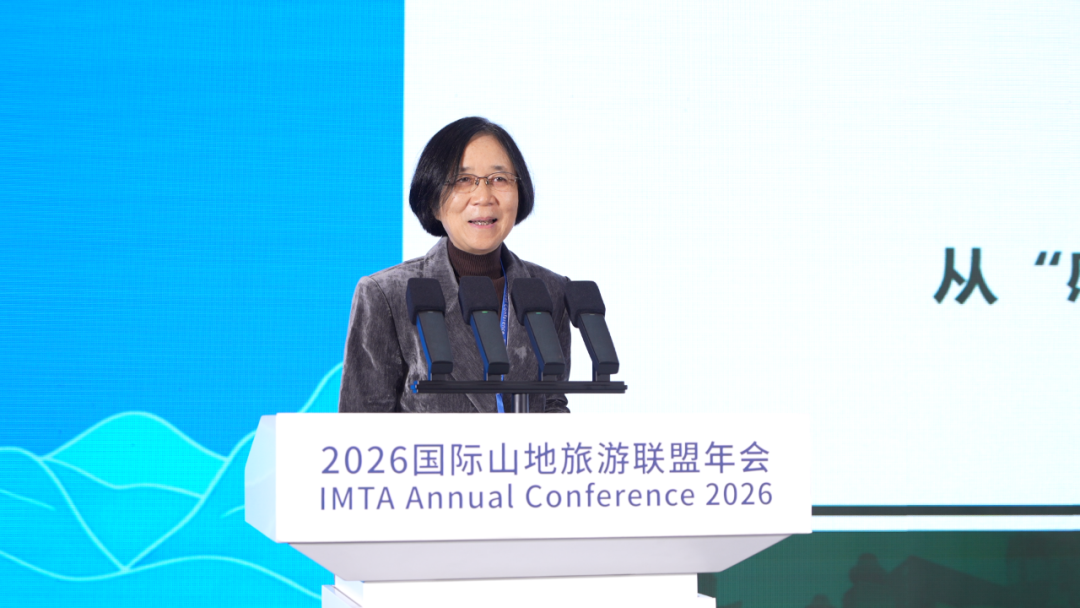
Xu Honggang, Dean of School of Tourism Management of Sun Yat-Sen University
Jiang Yiyi released the research “Mountain Outdoor Sports Industry: Scenario Innovation, Regulator Governance and International Development.” She noted that the number of mountain outdoor sports participants in China has exceeded 400 million, and the expansion of participation has outpaced improvements in governance, service and international capabilities. She proposed a governance framework based on data and standards, supported by access, capacity, rescue and responsibility, and coordinated by national, local and community platforms, as well as an internationalization path from product export to mutual recognition of standards and then to a greater say in international rule-making. The study provides a reference path for decision-making by industry regulators, operations by industry players and international exchange and cooperation, and has accumulated a research foundation for IMTA to advance standards development and participate in international rule-making.
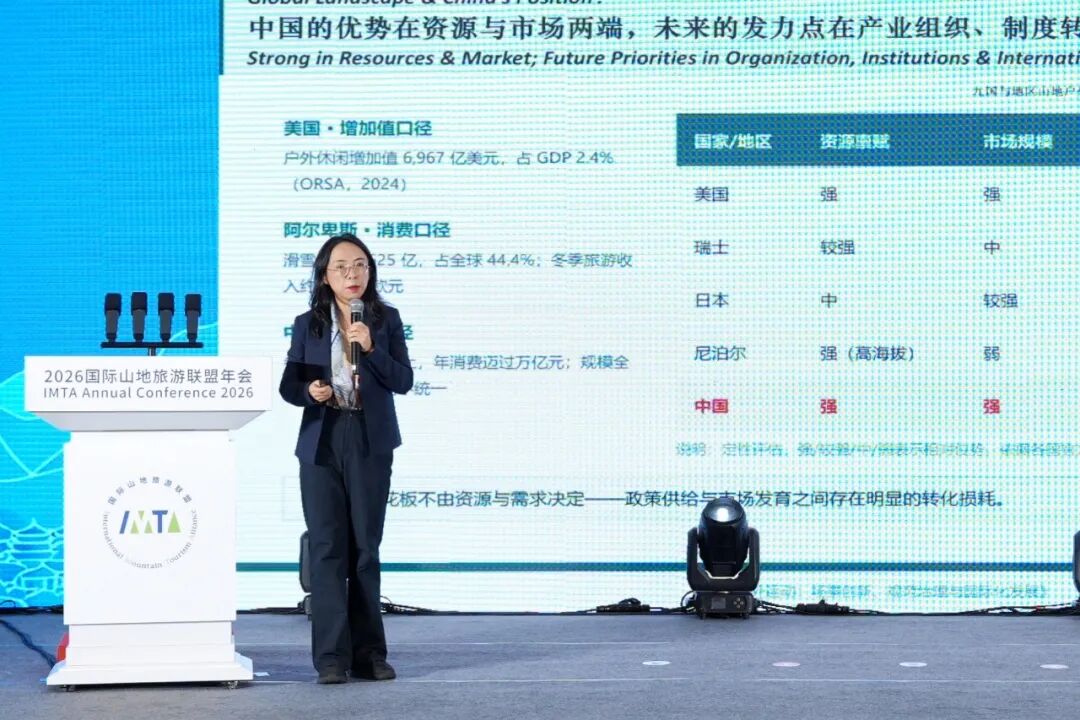
Release the research “Mountain Outdoor Sports Industry: Scenario Innovation, Regulator Governance and International Development.”
The IMTA Annual Conference built consensus through exchange and expanded space through cooperation, further demonstrating IMTA’s role as a platform and bridge and offering useful insights for mutual learning, sharing and sustainable development of global mountain tourism. Taking the conference as an opportunity, IMTA will further connect all parties, pool resources, translate consensus into cooperative practice, and make mountain tourism development better reflect ecological, cultural and people-benefiting value.
Source: International Mountain Tourism Alliance
Editor Ⅰ: Zhang Wenwen
Editor Ⅱ: Bao Gang
Editor Ⅲ: Liu Guosong